Some consider For Your Eyes Only (1981) to be Roger Moore’s very best film after The Spy Who Loved Me (1977). I’d certainly love to know what it is they see because for me this film feels very dated, especially with its one off score provided by Bill Conti that could rival Fletch for horrendously 80s soundtrack work (sorry Mr. Faltermeyer). This film has aged about as well as a formica countertop in 2026 and Moore looks old (he should have hung it up after TSWLM). Is there any redeeming qualities to it, or is this one destined for the very bottom?
Setting & Story
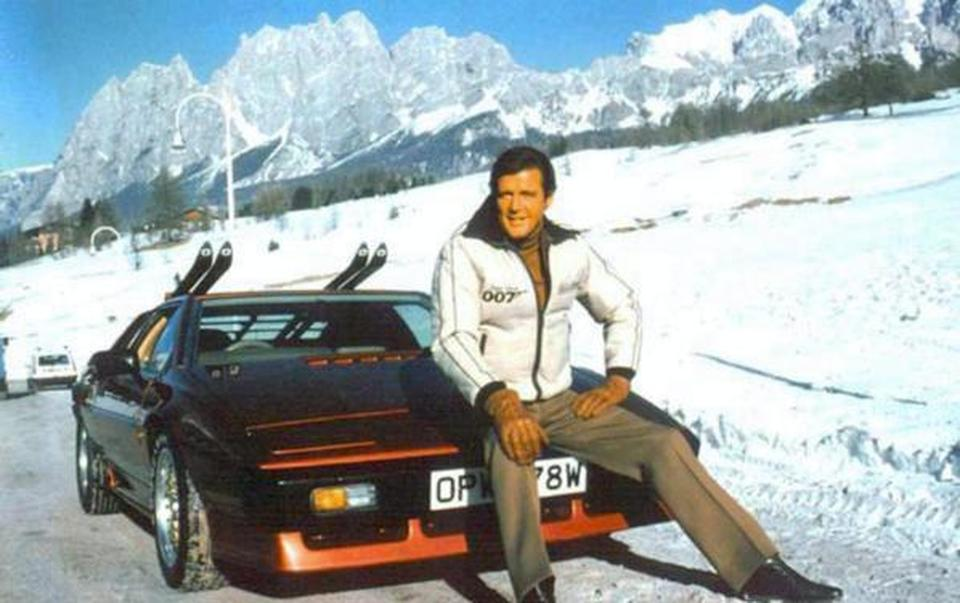
This outing is primarily confined to a single continent, taking us around the Mediterranean: Italy, Greece, Spain. From the mountains above Italy to the depths of the Aegean Sea, we get a proper European vacation out of this one. We get one attempt at a villain lair with the cliffside monastery in Greece that Bond attempts to scale in the climax. Most of our European city tours feel rather reliant on stereotypes and your typical vacation locations in spite of their natural beauty. It doesn’t help that the film visually looks very 1980s; from a saturated color palette to the chintzy set design. I get it, it’s 1981, and that’s exactly why it looks like a TV movie despite being filmed in widescreen format. We get some good action scenes out of these locales, and that’s about it. It’s all rather unmemorable, even the submarine scenes underwater are worse than Thunderball for me. 5/10
My best attempt to explain this rather confusing story is:
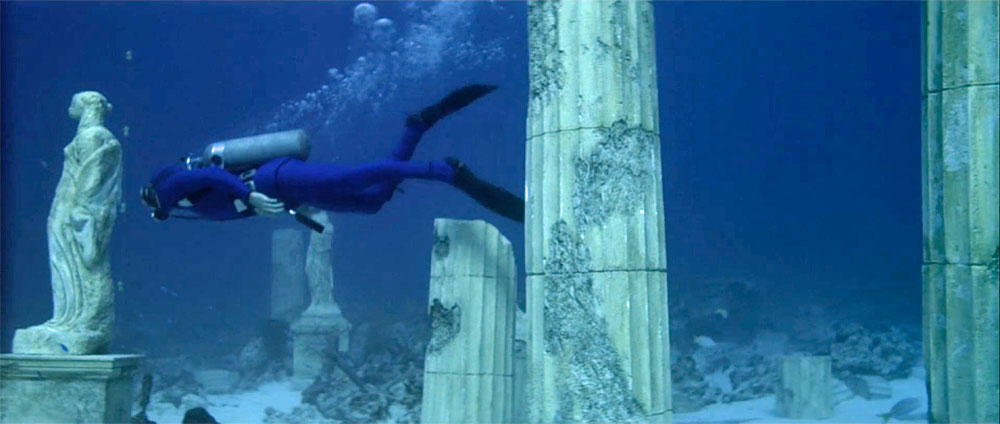
A British vessel carrying a launch control device, the ATAC is destroyed in a deliberate mine attack. Someone attacked the ship in order to steal the device to sell to the USSR. 007 is sent covertly to locate and infiltrate the vessel and secure the ATAC. A marine archeologist Havelock is tasked with assisting him in this covert recovery mission. Unfortunately the Havelock’s are killed by a hired gun in front of their daughter, Melina. Melina sets out for revenge, killing the assassin and continues to hunt down his financiers. She teams up with our hero since he is after the same people. Bond meets with an agent informant in Italy who refers him to Kristatos. After a bunch of different factions of goons seek to eliminate him, he learns that Columbo is actually a good smuggler and it is Kristatos behind the ATAC and everything else. Bond and Columbo infiltrate Kristatos’ shipyard before his main henchman blows it up with a mine to cover evidence. Then our former naval commander takes a sub ride to a shipwreck where he and Melina take a deep sea diving tour of the wreck to recover the ATAC where we get a showdown between ROVs in a bad rendition of Transformers. They surface only to be captured by Kristatos in some cinematically bad timing. Kristatos gets away but so too do Bond and Melina, as they escape their intended fate of becoming shark food. Our climax sees 007 scale a mountain lair about as steep as El Capitan in Yosemite. His allies Columbo, Melina and some muscle have a showdown at the monastery after he infiltrates the hideout to bring them up. Kristatos and his final henchman remaining (the Olympian) are defeated and the ATAC is destroyed just as our old pal General Gogol comes to retrieve it for the Soviets.
This story is cobbled together from a variety of Fleming short stories and overall lacks a narrative cohesion. We have series regulars, Michael G. Wilson and Richard Maibaum adapting our material for this outing, and I guess they were given a rather difficult task of making these disparate stories fit together. The film is moderately confusing, with two different major plots competing for your interest: Melina Havelock’s revenge and Bond tracking down the ATAC device to learn who has downed the British ship. Making things more layered and complex still are the villains, or who is and who is not a bad guy. Kristatos is our big bad, with his puffy lipped henchman following Bond throughout, but you start to get lost in all these hitmen after our hero. Of course there is Columbo, who is accused by Kristatos of being the real smuggler, only to help Bond in the end. There’s guys with white-dove insignia, connected to Columbo and then there’s other guys including an Olympic Biathlon athlete with the strength of Red Grant… it’s just all too muddy and none of these villains or henchmen are even that great. The weird subplot of Kristatos sponsoring a young Olympic skater (Bibi Dahl) who is sexually thirsty for Bond and just about any other man is… weird.
For being both confusing in its handling of villains and generally uninteresting, 4/10.
Between a lackluster romp across Europe and a confusing story cobbled together with spare parts: 4/10.
Gadgets & Vehicles
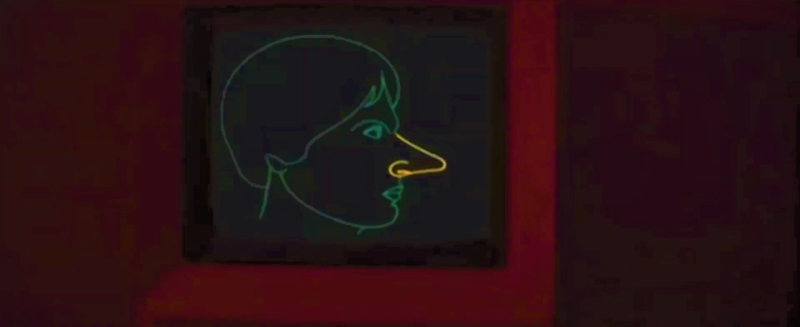
We get Q in the field for a brief scene that feels rather out of place in a Greek monastery disguised as an orthodox priest. Bond is able to identify the henchman with the puffy lips due to Q’s video game character design machine, the identigraph, which somehow does a better job than games I’ve played in the 2020s despite its green on green Colecovision interface. The visually dated device is meant to be programmed to create a likeness of a person through programmatic descriptions. It’s a fun little scene but doesn’t give our hero much to do in the field.
Bond is equipped with a Lotus again in this outing. His red Elise is well equipped, not that we would know since we never get to see him use it apart from warning his Italian counterpart not to touch any buttons inside it.
This film attempts again to overcorrect the Moore era tone, reducing his iconic camp to again ground our hero in more standard spy-fare. Instead Bond is left to get creative in the field, using his instincts over Q branch sophistication.
4/10.
Action Sequences
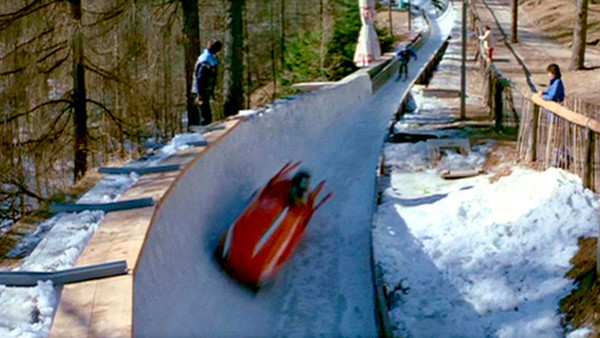
This is one of the few standouts in the film. The action blends humor, instinct and set-piece construction well for the most part.
The standout scene is probably the ski chase in Italy. While some of it suffers from rear-projection, making it feel dated, most of it is reliant on practical effects and stunt work. The creativity employed by Bond in the field to avoid a bunch of goons on his tail is well implemented. While he may lack Q branch gadgets, the improvisation he does engage in is both comedic and satisfying.
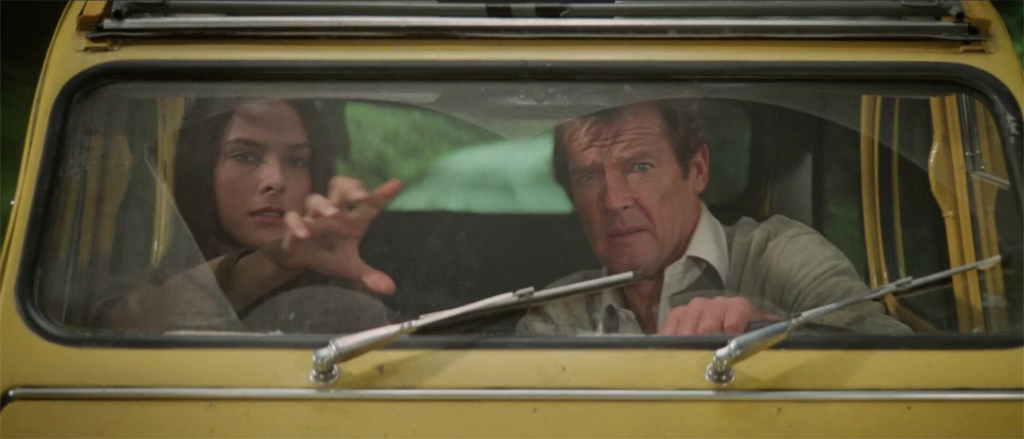
Other standouts include the first act car chase with Bond and Havelock fleeing a compound along a winding country road in her old clunker of a 2CV (following Bond’s self destructing car). I like how this scene allows the chemistry to really grow between Bond and Havelock. It’s a bit longer than it probably needed to be but it’s also pretty entertaining as well.
While this film has some standout action moments, it also has some stinkers too. The fight between Bond and a couple hockey goons where he cleans them up with a Zamboni is cringey. The underwater scenes in the shipwreck feel slow and cumbersome, with the battle between underwater ROVs even more awkward. It was a concept on paper that didn’t translate well to film. While high on tension and with great stunt work, Bond scaling the mountain didn’t do it for me either, certainly not for a finale. It felt visually detached from the action at times and I was constantly wondering why his allies didn’t shoot his adversary while he attempted to undo Bond’s climbing anchors.
We get a mixed bag here: 5/10.
Villains and Bond Girl
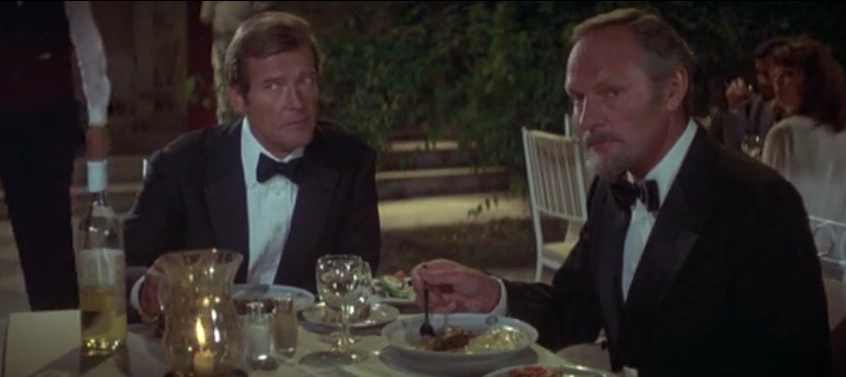
Kristatos is perhaps one of my least favorite villains in the entire series. He’s just boring. There’s not much more to say about him. Even his goons feel boring. If the filmmakers and writers were trying to score realism points here they certainly did. But they failed to score any entertainment points with it. Julian Glover delivers his part well as the refined double agent, but he’s otherwise completely forgettable in a series with so much more to offer. 2/10.
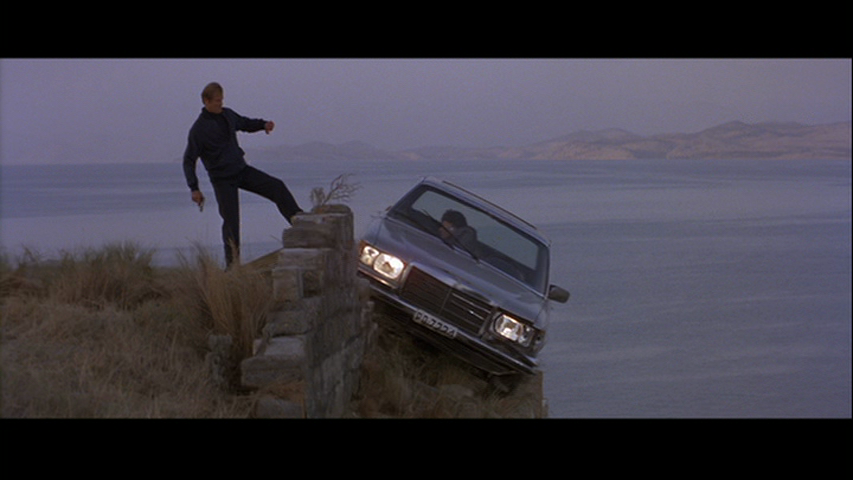
The goons in this film also stink. Both the Olympic henchman working for the KGB and the puffy lipped silent assassin are derivative, and uninteresting. I am glad they all take plunges from cliffs. 2/10.
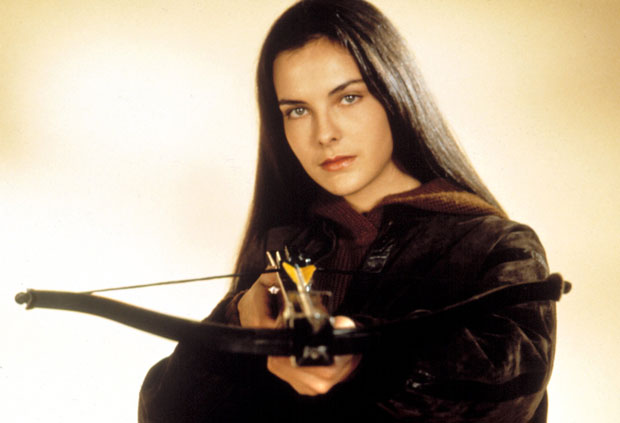
There’s hope for the film yet. That’s because despite a bland and confusing story with some of the most forgettable villains in the entire series we do get an outstanding Bond girl in Carole Boquet’s Melina Havelock. She’s terrific, and while her competing A-plot of revenge can add confusion to the story it never adds pacing problems to it. I absolutely love her bad-assery with the crossbow. Her dramatic acting is also solid, really selling us on the moment when her parents are killed, with that slow zoom into those iconic blue eyes. She is really close to being an equal to Bond, helping him throughout this adventure as an almost side-kick without ever feeling like a damsel in distress. For that reason, she gets a terrific 9/10 from me as she is among the best in the series.
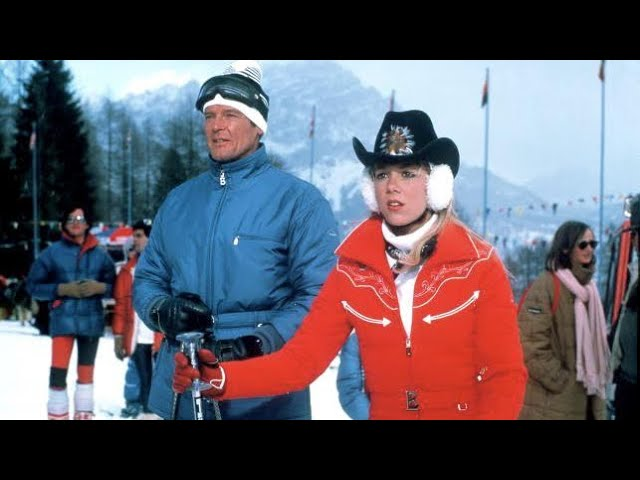
Bibi Dahl isn’t a Bond girl in the sense that she never sleeps with Bond (in spite of her best intentions). She is portrayed as a young, probably Epstein Island age, figure skater with Olympic pedigree. The character is portrayed by Lynn-Holly Johnson, a professional figure skater best known for the film Ice Castles (1978). I never quite understood the decision to include this character. She feels like a way to insert needless humor in a film that didn’t require more of it. 3/10 for the female JW Pepper. Just leave the “ugly Americans” out of this series (with few exceptions) please!
This is a polarizing category, with some of the worst, and some of the best, evening out to a 5/10.
Wildcard!
This film feels super dated. I especially dislike the score by Bill Conti. It is cheesy 80s dialed up to 10. I often wonder how I might feel if this film had an actual Bond score done by series veteran John Barry– or really anyone else. While some like this tribute to Harold Faltermeyer, I find it unbearable and it completely takes me out of the film. As an 80s baby myself, I find 80s cringe to be the worst cringe! Don’t serve it to me.
The look of this film feels dated too, with a washed out contrast that makes it feel almost flat like a modern Netflix show. As bland as the cinematography is, they also bump skin tones (making actors pop too much) and the coolness of the ski scenes (making them appear almost blue). This weird contrast combined with color grading gives the film a very distinct early 80s hue/tone. The overall look of this film is just cheap, outside the excellent underwater film work (that said I prefer Thunderball’s underwater action to this).
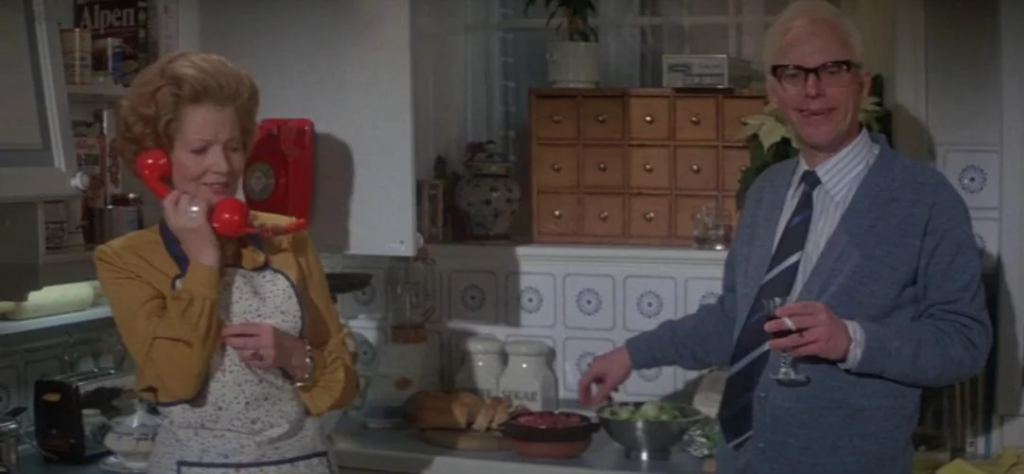
We get awkward humor that takes us out of the story as well: a sex-crazed Olympic teenager hitting on a 50-something Roger Moore and a terrible coda featuring Margaret Thatcher talking to a parrot. Facepalm inducing cringe.
There are of course some honorable mentions in this film: The ally character of Columbo produces some fun antics, but he is introduced pretty late in the film’s runtime. The underwater cinematography is stunning, was it a different crew? The revenge against Blofeld for Tracy’s death in the precredits and that ridiculous line that is apparently an inside joke between warring Bond producers: “I’ll buy you a delicatessen, stainless steeeeeel!”
4/10.
Conclusion.
This is probably my least favorite Roger Moore film, albeit I have yet to do a retrospective on A View to a Kill so we shall see. Roger Moore’s tenure as Bond sees this constant adjustment to tone, trying to balance humor and action. The filmmakers mostly succeed in Live & Let Die, while turning out a lovable but tonal mess in The Man with the Golden Gun. It gets it just right with The Spy Who Loved Me before ramping it up too much in Moonraker. Here it dials it down too much, before getting it close to right again in Octopussy. It’s why in many ways the Moore films are the hardest to rate, and I suspect the ones I already have given a retrospective review for will get some revisiting before my final list. All that said, this film is forgettable, it’s boring and bland and very much stuck in 1981. Bury it with Margaret Thatcher. 4/10.
Discover more from MK Leibman Writer
Subscribe to get the latest posts sent to your email.