While I am not especially a fan of the Daniel Craig era, I think it is important to understand why it is the way it is. For a franchise that has at the time of SPECTRE’s release in 2015 run for 53 years, it needed to rely on reinvention to stay relevant. That’s clear if you look at several films throughout the series. In 1973 Live & Let Die took advantage of Blaxploitation films. In 1974 The Man with the Golden Gun incorporated the kung-fu craze. After Star Wars IV was a massive hit in 1977, 1979’s Moonraker went balls to the wall crazy in sending Bond to space with laser guns. The 1980s Moore era perfected the blend of action-comedy popular in cinemas at the time. The 1990s with Brosnan saw the elevation of high octane action set-pieces to amp up the thrills at a time when mid-budget action hits and franchises were numerous. Then we get the Craig era of films which came of age in an era of expanded universes and established franchises with series-arcs. Thus we get SPECTRE, which takes its name from the iconic villain organization from the series golden era under Connery. EON of course lost the rights to this name and its iconic villain, Blofeld, in the 70s and by 2015 had only just won the rights back. Thus we get a story that attempts to shoe-horn in a connective tissue between Blofeld/SPECTRE and the Craig films. This narrative decision backfired spectacularly resulting in many considering the film among the very worst in the franchise for its malpractice in handling iconic IP. While I do not necessarily disagree regarding the narrative decisions, I must strongly disagree with the ranking of this film. So we begin my surprising defense of SPECTRE.
Setting & Story
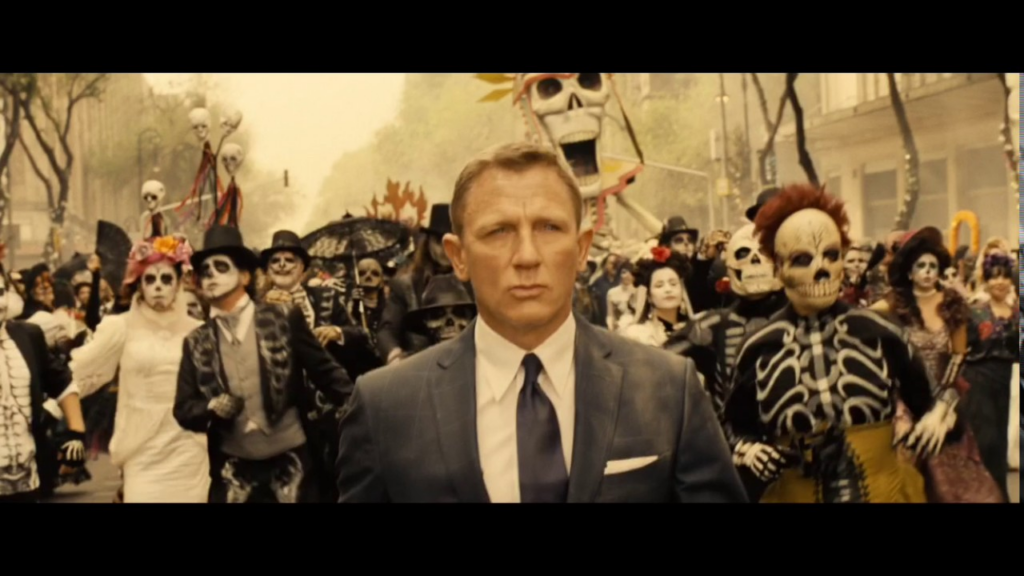
When you think of SPECTRE you’re most likely going to think of the pre-credits sequence set in Mexico City. Director Sam Mendes performs a cinematically engaging tracking shot that lasts for close to ten minutes as we follow Bond to his target: Marco Sciarra. The pre-credits sequence is among the most artistically daring and creative of all Bond openers. It immerses us in the vibrant world of Mexico City during the Day of the Dead festivities, culminating in a fight aboard a moving helicopter, with some outrageous stunt work.
The rest of SPECTRE can feel like a bit of a blur after this experience. We globe-trot around quite a bit; a car chase in Italy (paying homage to Monza’s Parabolica turn), a plane/car chase in Switzerland, a fight on a moving train through African desert, a showdown in a subterranean desert lab/bunker, and a finale in London after dark, including along the Thames.
Much of SPECTRE is building on fan-service, a formula which was successful in its predecessor, Skyfall. Many of our locations are in fact easter eggs for the fandom, paying tribute to the Bond films which came before. It is fun to try and pick these out.
The meeting of worldwideSPECTRE operatives sharing their own mission status updates is reminiscent of Thunderball where we saw a similar villain convention in Paris.
The clinic atop an alpine mountain where Bond first meets Madeleine Swann is of course reminiscent of Piz Gloria, from On Her Majesty’s Secret Service.
Our plane / car chase through the alpine mountains, downhill, is the sort of silliness we might get from a Moore Bond film, down to our plane losing its wings like Live & Let Die, which is why I love it.
The scene on the train between Bond and Swann is a callback to his romance with Vesper. However the setting itself, and the very physical fight between Bond and Mr. Hinx played by the physically imposing wrestling superstar, Dave Bautista, is actually a tribute to From Russia with Love. Craig’s Bond is even wearing Connery’s trademark white dinner suit and poppy flower during the showdown.
Blofeld sets the demolition timer for three minutes in the old MI6 HQ, the same three minutes Bond gave Alec Treveleyan in Goldeneye.
When Bond flees a blown-up MI6 in a matte-black speedboat along the Thames, it pays tribute to The World is Not Enough, and its iconic pre-credits sequence.
As a mega-fan of the franchise, I quite enjoy all the little easter eggs, and these are just the ones which immediately came to mind during my re-watch without looking it up. Combined with the excellent pre-credits visual storytelling set in Mexico City, I quite like the use of settings in this film even if none of them outside the pre-credits sequence and desert lab/lair are especially iconic or memorable in the way of say, the iconography of my previously reviewed film, The Man with the Golden Gun. 7/10.
Oh boy, now on to story.
Let’s review the plot up to our big reveal first so we can better digest it…
Picking up on Skyfall’s theme of the 00-program being obsolete in an age of new technology, the program is once again at risk. Max Denbigh is the new head-honcho from MI5 with ample political connections given his pedigree. He has informed M that the program will be voted obsolete in favor of a nine-country intelligence sharing arrangement called “nine eyes.” The program would be a massive surveillance network paid for with private funding, and set up in a new intelligence HQ with the former MI6 HQ to be demolished as the division is absorbed by MI5. Meanwhile Bond is in trouble for his antics in Mexico City and is once again temporarily suspended in the Craig era and injected with nanobots that track his location and vitals worldwide. We come to understand that Bond was following a lead from the late M, who told him to kill Sciarra. With the unlikely help of Q along with Moneypenny, Bond disappears for up to 48 hours to try and follow the Sciarra lead to learn who he is working with.
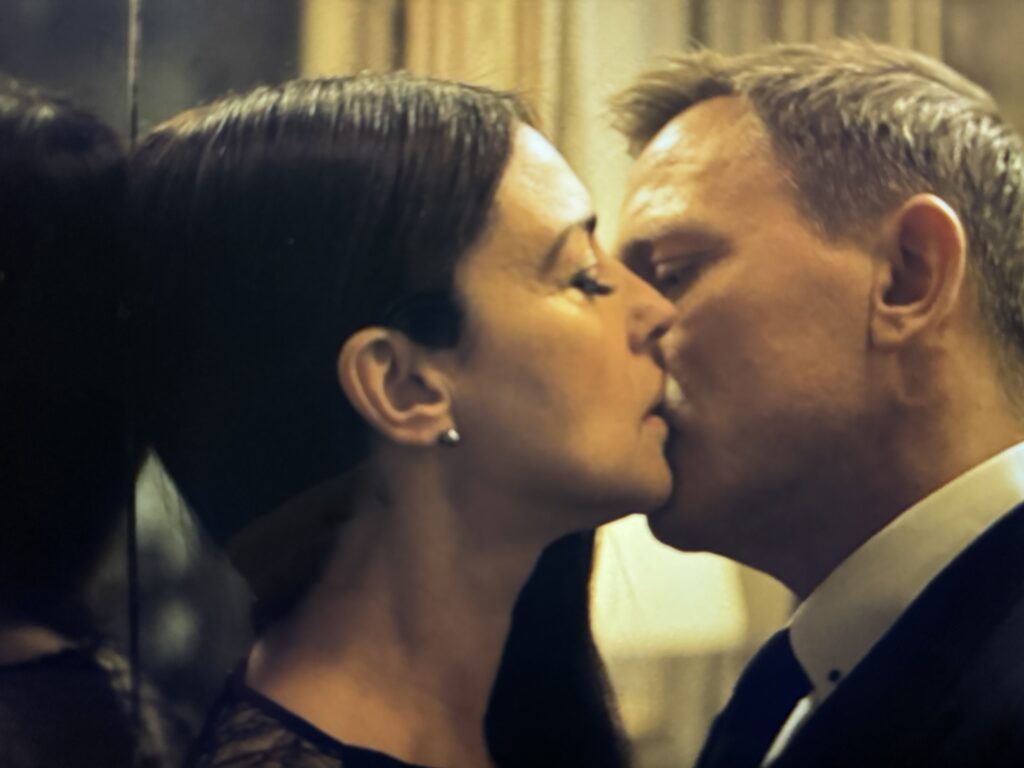
While in Italy, Bond meets Sciarra’s widow portrayed by the timelessly stunning Monica Bellucci. Her life in danger following her husband Sciarra’s murder, Bond protects her in exchange for information (and sex, thank you very much). Sciarra was in search of someone called “the Pale King,” and he was tasked with this operation by an organization led by Franz Oberhauser (a name Bond recognizes due to his own past). Paying tribute to the long table of worldwide SPECTRE operatives, as first seen in Thunderball, the Italian meeting of the organization is infiltrated by Bond. He learns the Pale King is holed up in Austria, and is in fact his old nemesis Mr. White. Before Bond can process this information, he is burned by Franz Oberhauser (who everyone in the audience already knows is actually Blofeld).
Bond escapes the Italian SPECTRE meeting with henchman Mr. Hinx on his trail in a super-car chase through the back-alleys of Rome, and along the riverbanks of the Tiber. He escapes in very Bond-ian fashion and makes his way to Austria, albeit with a hitch. Their new MI5 boss, Max Denbigh, has surveilled MI6 operatives helping Bond, and even M has already suspected Bond is in Italy based on the Aston Martin DB10 in the river making the news. Q lies to M, stating Bond is in Chelsea. Mr. White aka The Pale King is holed up in a safe-house, dying of cancer caused by radiation poisoning. Bond learns that Mr. White was turning against SPECTRE due to its increasingly deranged attacks, and thus he encountered the wrath of its leader, Mr. Oberhauser. Bond demands information leading to him, but White refuses until Bond gets at who he is protecting, who he is afraid they will target: his daughter. Bond provides Mr. White a clean death and the promise that he will keep his daughter safe if provided with her whereabouts. White tells Bond to go to a certain alpine clinic and she will provide information on a name: “L’Americain” (French for the American). Not long after Bond moves on with this information, Mr. Hinx breaches the safe house and continues to track 007, whose entire conversation with Mr. White was recorded on security camera (a running theme in this film: the ever-present eye, who is watching).
MI6 can no longer protect 007 from reprimand, and Bond is called home with the 00-program soon to be dissolved in an upcoming security conference vote. Bond informs his allies in MI6 that he has a lead, Franz Oberhauser. Franz was rumored dead in an avalanche as a child, but Bond tells MI6 that no, he is very much alive! This is met with skepticism, before Bond pleas with Q to look into it.
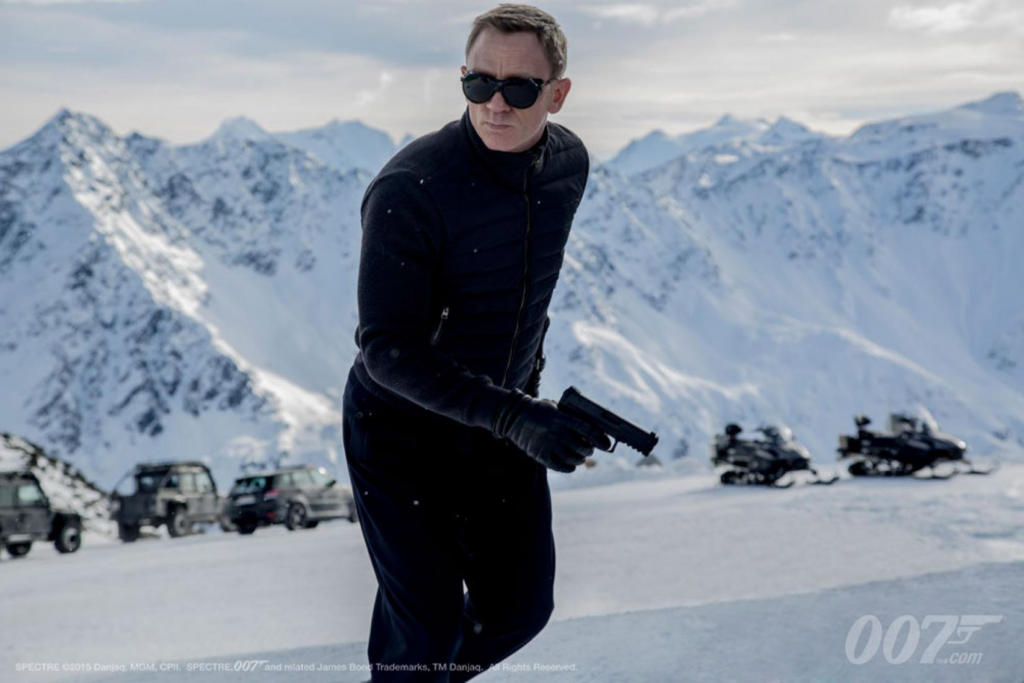
Now arrived in the alps, Bond meets with Dr. Madeleine Swan. He plays the undercover game of being a patient before segueing into his demands for information and the promises he made her father, who she learns is dead. She threatens security on him and gives him minutes to leave. Bond instead approaches the bar where he is surprised by Q, who has been sent to the field to take him home. Bond instead gives him a recovered SPECTRE ring for examination in the hopes to prove Oberhauser is in fact alive. Just as security comes as promised, Madeleine is abducted by Mr. Hinx setting up Bond to chase the convoy of villains down in a prop-plane. In the interim, Q must escape his own peril via ski-lift as goons are sent to retrieve him and his laptop (which is close to proving Bond right).
Even after saving her life, Madeleine is still reluctant to trust Bond, but given her circumstances, who else is there? She reveals L’Americain is not a name but a place. They travel together to the hotel in Tangiers where the therapist side of Dr. Swann takes over in questioning Bond on why he chose this lonely profession, one shared by her late father. Bond also learns this hotel room is where Mr. White would take his wife on anniversary (an odd choice). He evades Swann’s personal questions just as she evades his advances (again). While she rests, Bond keeps guard before being led to a drop-zone behind the wall of their hotel room by a curious rat. Mr. White used this hotel as a base of operations from which Bond gathers new leads on Oberhauser.
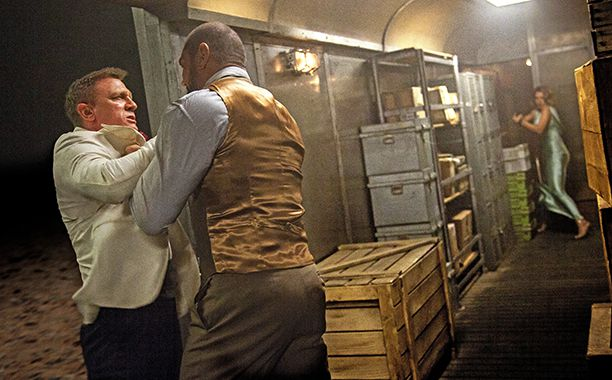
In a setting straight out of From Russia with Love, Bond joins Madeleine on a train ride to our master villain’s lair. He learns she is far more adept with a gun than we would have realized, and we gain important backstory from Madeleine, that a man was sent to kill her father as a child (a storyline which will be further explored in No Time to Die). The tender back and forth between Bond and Madeleine in the dining car is clearly meant to call back to Bond and Vesper, but the chemistry is a bit lacking here (more on that later). Before they can continue to speed-date, Mr. Hinx crashes the party, literally. What ensues is a memorable and physical fight in a call back to Bond vs. Red Grant in FRWL. Madeleine helps Bond, who in the end uses some creative 007 thinking to tie Hinx to barrels that are then ripped from the caboose with him in tow. And off to bed our two lovers go.
Back in London, Max Denbigh has finally secured the votes for his spy-ware project (due to a false flag attack in the one no-vote country) and he informs M that the 00-program will be disbanded and the former MI6 HQ demolished. M, Q and Moneypenny agree that Bond must be isolated as Max will be tracking him and them. However, they are aware from Q that Bond is onto something big: a rather nondescript location in the African desert.
Now we arrive at what we need to discuss…
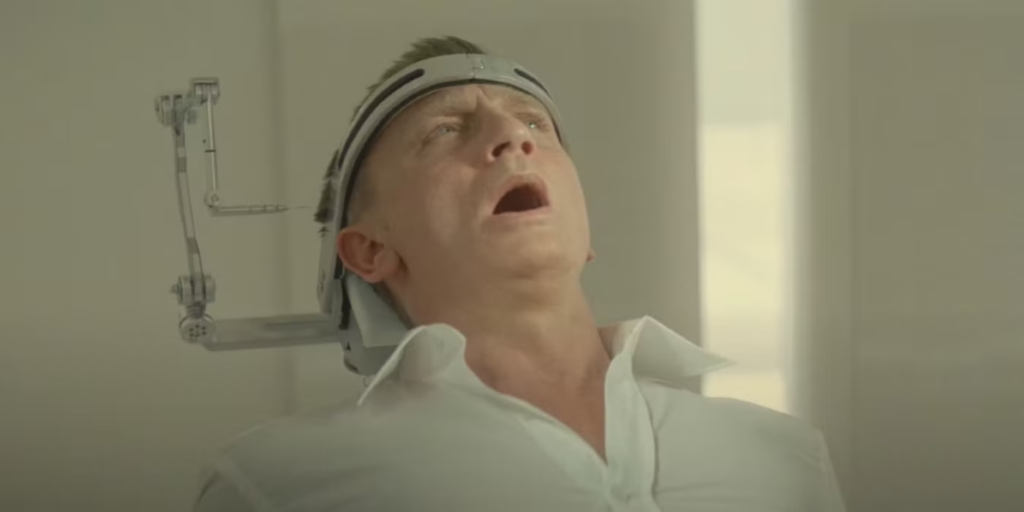
Bond and Madeleine arrive at SPECTRE HQ in the desert, an underground bunker whereby Oberhauser is in charge of Nine Eyes. Yes, Nine Eyes was privately funded by SPECTRE itself, and we learn that Max Denbigh is also an acolyte of Mr. Oberhauser, who will now have access to all the intelligence gathering of the West. If this were our main twist, with the villain reveal using Denbigh as a puppet for profit, it’d be a strong story. But no, in a quest to further tie in the Craig era and build an expansive universe where everything is interconnected like an MCU film, the writers shoe-horned the infamous “Brofeld” plot point and state that not only is Oberhauser Ernest Stavro Blofeld, but he is Bond’s stepbrother and “the architect of all your pain.” Yes we learn SPECTRE and Blofeld were behind all of Bond’s previous deadly encounters, including the Vesper Lynd tragedy up through the events of Skyfall.
This narrative malpractice is not only deeply improbable but it also makes no sense, especially when you try to connect SPECTRE to Skyfall as that was very clearly a solo-act motivated by the villain’s revenge against Judi Dench’s M. If you’re wondering why this reveal wasn’t set up better in prior installments, EON, the producers of the Bond franchise at the time, only just recovered the rights to SPECTRE and leapt at the opportunity to (mis)use it. So what we get is a ret-con that makes no sense no matter how hard you try and force it to. Many fans, myself included, wish that the producers would have saved SPECTRE for a new Bond, allowing the Craig era to conclude on its own merits before using the famed villainous organization to reboot the franchise with a new Bond actor. But they just couldn’t leave well enough alone.
The need to personalize every aspect of Craig’s Bond is also another annoying choice here, and one that falls prey not only to a cliche (“Luke, I am your father”) but one that was also parodied as a cliche in Austin Powers: Goldmember, which is of course a parody of the Bond world itself. In that film, it is revealed that Austin Powers (Bond) and Dr. Evil (Blofeld) are actually step-brothers. How this obvious parody got past producers at EON is almost embarrassing! Not only is this narrative choice a cliche, it simplifies the complex character of Blofeld down to someone motivated by daddy issues (like the similarly weak villain in Skyfall). It is cheap, lazy cliched superhero writing, that of comic book quality unfit for the franchise at hand. We of course also get the cringe-worthy exposition dump where Blofeld reveals his name change (which is about as surprising a reveal as Cumberbatch revealing that he is Khan in Star Trek Into Darkness). He then goes on to state how he was jealous of Bond’s relationship with his father, and so he killed their father, because Blofeld always needed to be number one (a reference to his code name in SPECTRE). This need to serialize the franchise and personalize the villain/hero dynamic with a cinematic comic book cliche is downright malpractice of this franchise’s IP! It is why so many fans cannot enjoy this film despite the wonderful one hour and forty-five minutes preceding this reveal.
The producers clearly wanted to serialize the Bond franchise, presumably to compete with the success of other major intellectual properties, such as the comic book franchise, MCU. Interconnected stories within larger franchises were the norm during the time period SPECTRE was released. So it makes sense that the producers would want to emulate that success to keep the Bond property relevant to modern audiences but they did so with some very, very unforgivable and sloppy writing that would tank not only the remainder of this film’s runtime, but the subsequent outing, No Time to Die, as well. In some ways I think killing Bond at the end of the latter film was a way to kill off this mistake, and to erase this chapter of the franchise in a way where no possible continuity can be established from No Time to Die onwards. This is also why I suspect that Bond 26 will be a prequel to Casino Royale, not in the sense that it will have narrative continuity with CR, but rather it will allow our new young Bond actor to explore a mission that earns him his license to kill. In CR we see Bond finally get his license to kill, before setting out on his first mission. I suspect Bond 26 will be a mission where Bond is young, maybe even exploring his Navy life, before he gets recruited by MI6 and eventually earns his license to kill. This would be my choice if I were to approach the series reboot and it’s what I hope we will get, but also what I think we will get (if the Hit-Man produced Bond game set for release in 2026 is any indication).
But where does this story rank for me, and does it ruin the film for me as it does for so many others?
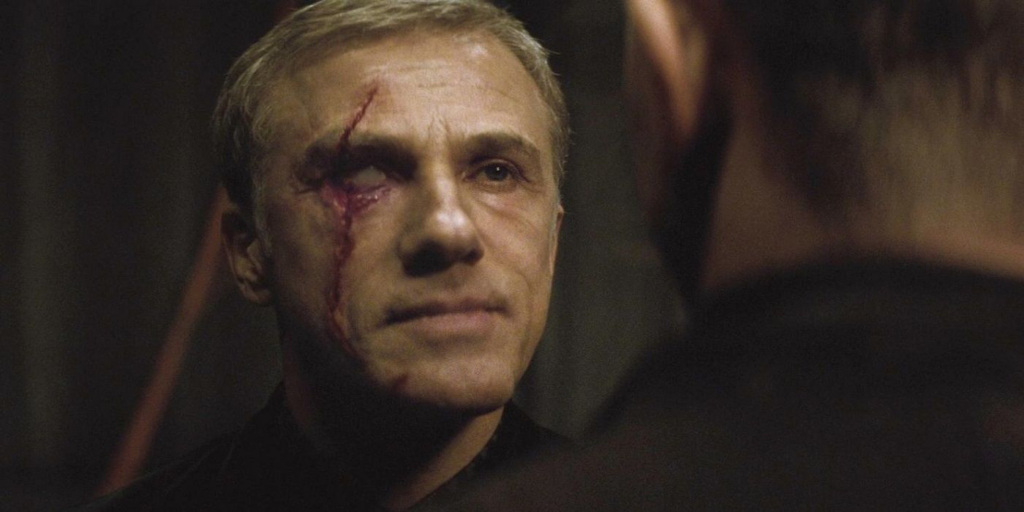
When I first saw this film in theaters, I absolutely hated the Blofeld reveal and the cheapness of its impact on the historical franchise. I remember turning to my friend at the time, stating “I cannot believe they are going to turn Bond into the MCU via a poorly implemented ret-con of the Craig era, I HATE this interconnected storyline bullshit, Bond should be stand-alone outings!” My friend agreed that he didn’t like the reveal, but he actually said that outside of it, he quite liked the film. Ten years later, and I find myself agreeing with him. Now that I know that ridiculous reveal which is coming, I can just sit back and enjoy what is perhaps the only Craig era film to really lean into the Bond formula, even attempting some humor alongside the more Bondian set-pieces. Unlike its predecessor Skyfall, whose third act narratively went off the rails as well, the third act of SPECTRE still felt like a Bond film. Also unlike its predecessor which relies heavily on plot contrivances to make its point about modern technology vs. old school spy-craft, I quite like the storyline of modern technology being misused by government alongside a complicit private enterprise, as it is far more grounded here. In a post-Snowden world, Nine Eyes feels very realistic, and Max Denbigh in my opinion is the standout villain of this story, so much so that I sort of see the Blofeld reveal as something I can sort of hand-wave away, since the Nine Eyes arc is really what still ties this film together as a cohesive and believable story.
I’d simply ask critics of this film to tell me: did you enjoy this film up the 1h45m mark where the Blofeld reveal was made? I see many try to argue that no, they did not, criticizing everything from the admittedly terrible Sam Smith song to the color-grading. But these are minor critiques, aren’t they? I have seen others argue the film is boring, and even on that I cannot agree. So to each their own.
Yes, the story is a mess when you analyze the malpractice of the Blofeld reveal. However, we get a grounded story around that featuring a government in bed with private industry to create a new intelligence apparatus for profit. I absolutely love this story-line and feel like you could make a case for it being the A-plot. So if you can, like me, view the sloppiness of the Blofeld ret-con as narrative surplus, you can sort of get past it. I ignore it, because I accept it is absolutely drivel. But it does not ruin the film for me the way the massive plot contrivances and tonal inconsistencies of Skyfall does. I just look at Blofeld as the guy trying to gain intelligence via his collaboration with Denbigh, and ignore the personal vendetta bullshit because it has no affect on the A-plot of Nine Eyes. You can ignore it, and the rest of the film narratively works. So for this reason, story gets a serviceable albeit far from perfect 5/10.
So now that I have taken great length to dissect the most controversial aspect of this film, where does Setting & Story rank overall? I give it a respectable, but middling 5/10. It’s obviously the weakest part of this film but it is not a deal-breaker the way even its predecessor was (I think Skyfall was both less a Bond film in terms of formula and had a far more improbable and sloppy script).
Gadgets & Vehicles
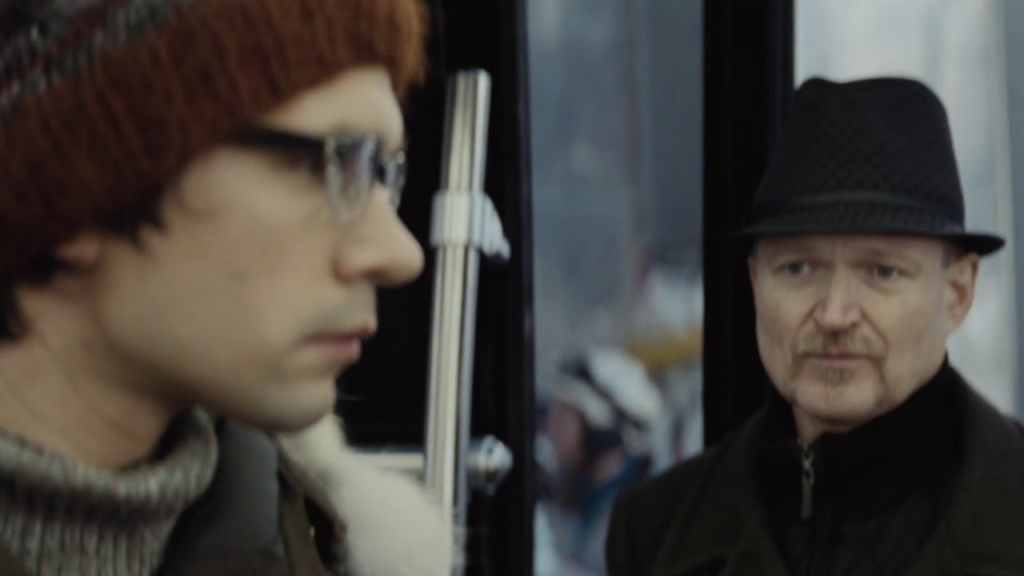
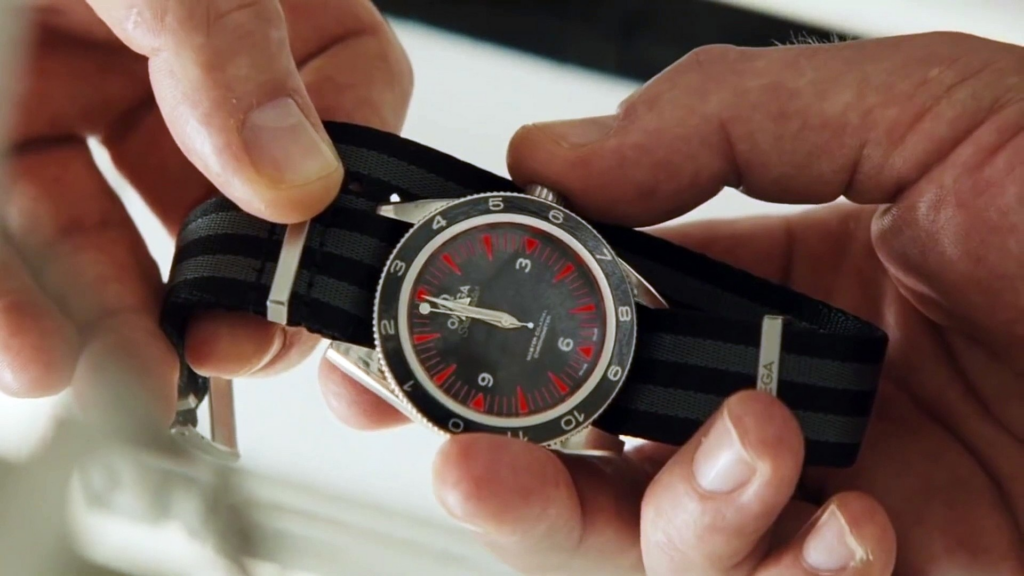
Ben Wishaw has settled into his role as Q, and has apparently gotten some feedback on his ill-conceived pen joke in Skyfall because while it is not much, we do get some Q-branch sophistication here. Bond is provided a watch, to which Bond asks, “does it do anything else?” Q quips, “it tells time… but there is a setting which can get quite loud.” This is obviously a reference to the explosive setting, which later enables Bond to escape Blofeld’s desert lair.
We get a new updated Bond car here too, one that actually has gadgets beyond a health-pack. Our Aston Martin DB10 is not only gorgeous, but it has a few tricks up its sleeve as well. We get one car chase with it, before the $3m prototype reserved for 009 is tossed into a river, as Bond ejects with a humorous quip— did I get that right? Humor in a Craig film!? Yep. And just in case you were wondering what happened to the old trusty DB5? Q has taken to rebuild that from the steering wheel on up. It is of course featured heavily in the sequel, No Time to Die.
Overall we get a decent bit of Q in the field here, which allows Wishaw to really make the role his. Unlike Skyfall we abandon the disdain for Q-branch gadgets, leaning into it in a practical way alongside our computer genius persona that Wishaw’s Q is best known for.
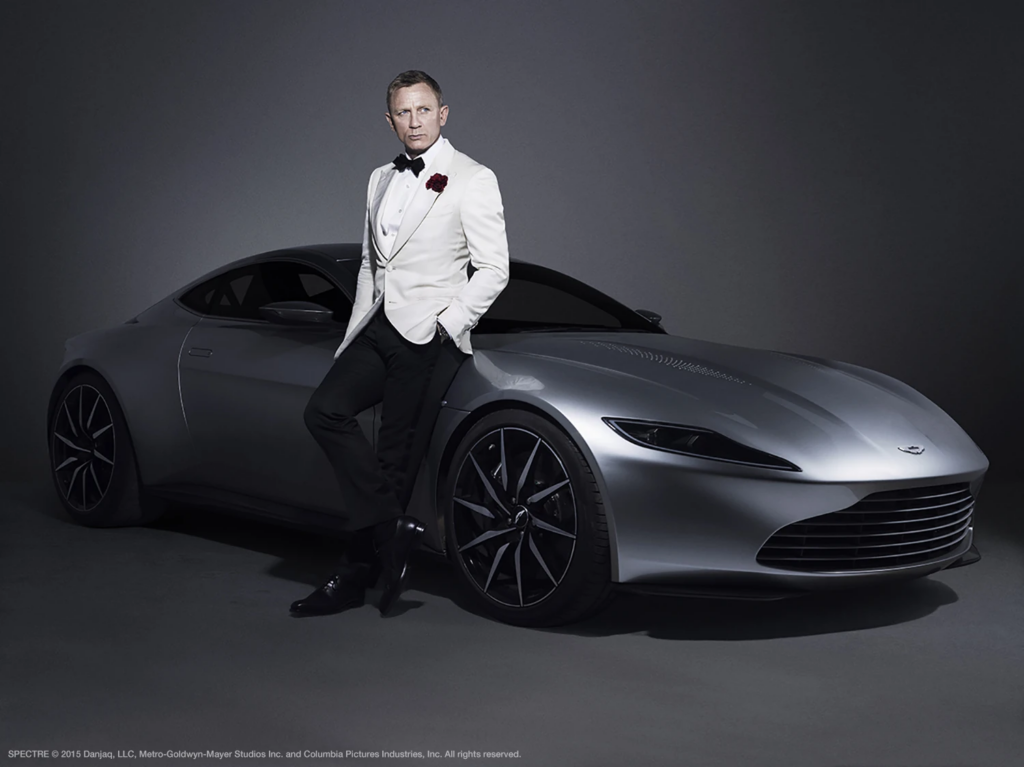
So overall, this category earns a respectable 6/10.
Action Sequences
I honestly don’t know why so many are critical of the action in this film, I think it is very well directed. It also attempts to use the Bond formula for the first time in the Craig era.
A reminder of what that formula is:
- Unique action set piece which forces Bond to get creative
- Allow Bond to use Q-branch equipment and/or cunning to evade danger
- Incorporate humor to balance the action
Let’s take a look at our car chase in Italy as an example of this.
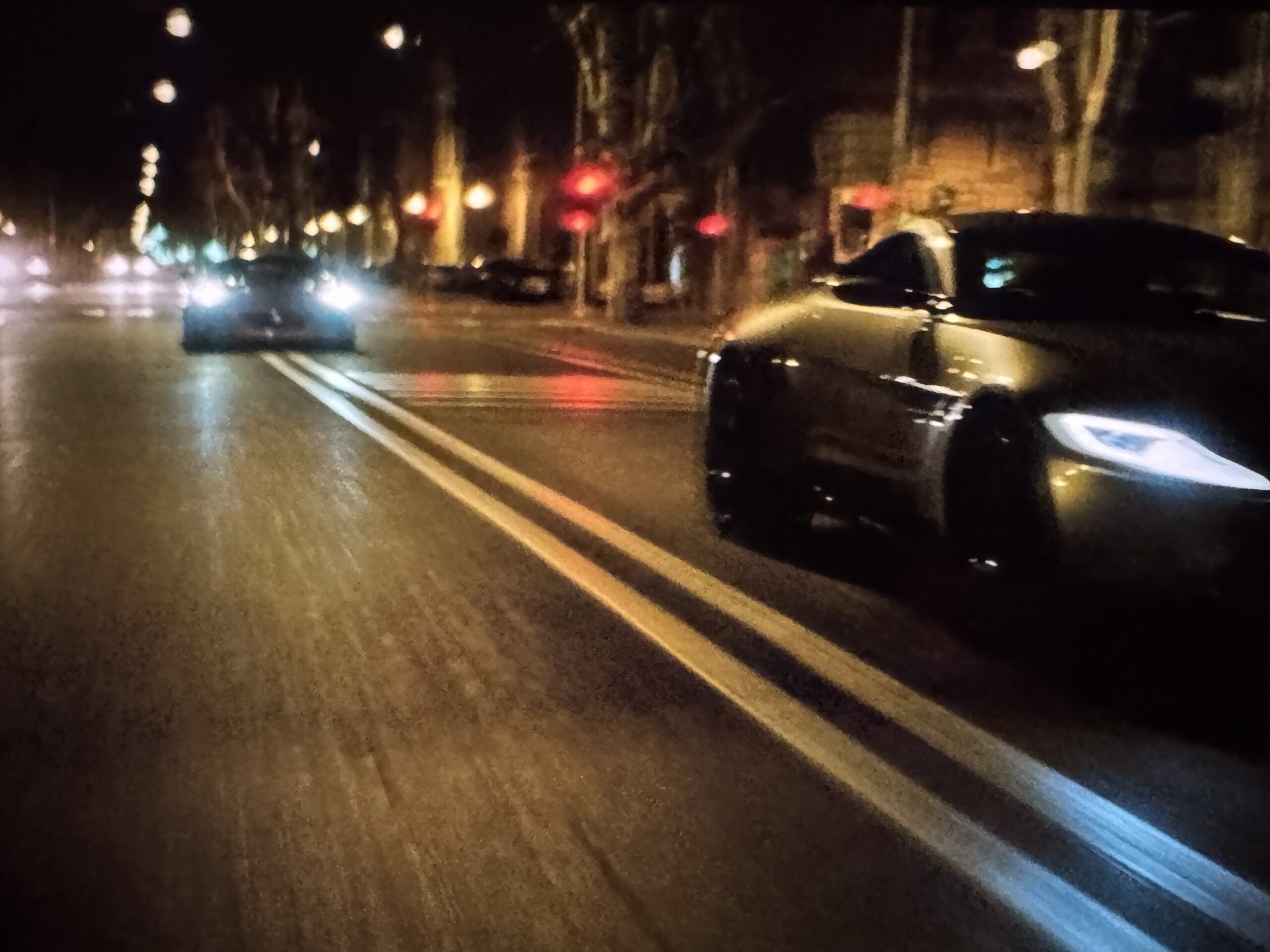
Bond fleas in 009’s Aston Martin, which has yet to be equipped with bullets. Mr. Hinx is right on his tail, and Bond must figure out what this thing can do. While fidgeting with the gadgets, he finds a music option customized for 009, Sinatra’s New York, New York. That bit of humor is follow up with a Moore-Bond standard, 007 intermingling with civilians in an action set-piece. Bond must force a slow moving FIAT out of the way, he pushes it up to 75mph, before the car comes to a stop in a parking spot just before a wall with its shocked elderly driver collapsing into the airbag. In a bit of racing direction that fives us a sense of speed, we then see the Aston on a river bank incline, which feels like the original Parabolica turn in Italy’s famed Monza F1 circuit. Eventually Bond figures out one gadget that works, a flame thrower. After setting Hinx’s Jaguar on fire, Bond uses an ejector function to parachute out of the DB10, which winds up in the Tiber river. Bond lands on street level, throwing his parachute to the ground with a Brosnan-esque quip thrown the way of shocked spectator.
This is classic Bond action, and it is supremely well directed. I think much of the criticism is that it takes place at night and feels dark, hard to see at times. I don’t really share this criticism, and I will certainly get to Hoyt Van Hoytema’s cinematography, but I suppose it is somewhat valid. But this is a stylistic choice to accompany visual storytelling.

Another stand out sequence is the plane – car chase in Switzerland. This sequence incorporates much of the same Bond formula. My only real criticism is that we didn’t get the triumphant John Barry score-drop when Bond flies out from the barn. The scene also pays homage with another easter egg, Bond’s plane loses its wings in the chase sequence, as we saw previously in Live & Let Die. Overall the sequence manages to be both thrilling while still true to its tried and true Bond formula.
The fight aboard the train between Bond and Bautista’s Hinx is among the best physical fights in the series to date. It takes its inspiration from From Russia with Love and ups the ante with crashing destruction. It’s a fantastic scene.
I do however share the criticism of the finale, especially Bond’s escape from Blofeld’s lab. The escape feels rather effortless despite how well guarded it is. Furthermore the explosion resultant from a single 9mm impact seems highly improbable. I also disliked the sequence of Bond in old MI6, with the entire setting designed to remind Bond that Blofeld is the architect of all his pain. I felt like we deserved more of a finale than what we got.
So with a return to series form amid decent overall action set-pieces and fights and in spite of a lackluster third act conclusion, the category gets a solid 7/10.
Bond Villains & Bond Girls
We technically get two main villains in this film, working together but only established to be the case in the third act reveal.
First, let’s get the obvious one of out the way: Franz Oberhauser / Blofeld.
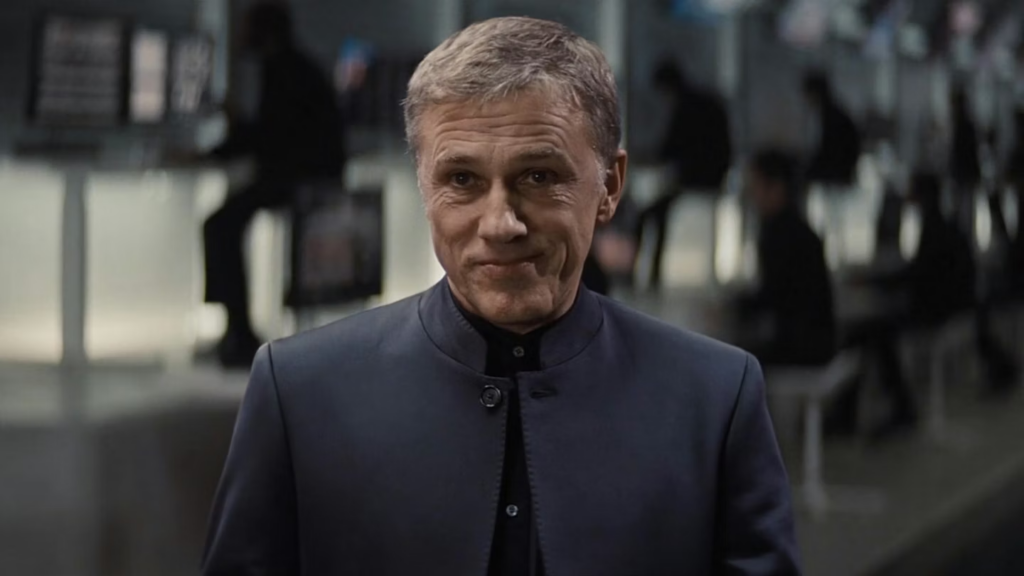
As mentioned already, the reveal that Oberhauser is actually Blofeld is insulting to audience’s intelligence. You cannot name your film SPECTRE and expect anyone to believe it will be absent Blofeld. Have producers learned nothing from the infamous Khan reveal in Star Trek Into Darkness? This plot-twist reveal is again exemplary of the comic book slop infecting my beloved franchise.
So too is this incarnation of Blofeld, who is reduced in this outing to a petulant child with daddy issues. We could have had a great cooperative plan between Blofeld and the new head of MI6, Max Denbigh. Instead we throw that plot point away to create a meaningless world building exercise to ret-con the entire Craig run to create an interconnected universe like… a comic book film. I hate this!
4/10 saved only by Christoph Waltz’s performance. He’s the worst Blofeld the series has ever seen by a country-mile, but he’s still Christoph Waltz.
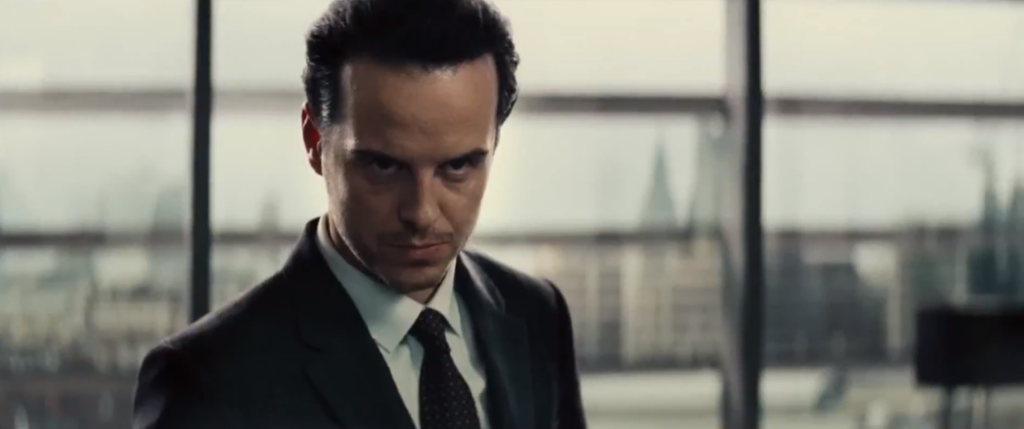
Now onto the real standout villain of our story: Max Denbigh, or as Bond calls him: C (presumably for cunt, let’s be real). Cunt is well cast too, with Andrew Scott perfecting that posh little condescending cunt-nod so well. God I wish we had even more of him, but every scene we do get him in makes you want to root against him even before you realize he is (of course) working for SPECTRE. They do earn this reveal well though, we get just enough information up to the reveal that Nine Eyes is in fact a SPECTRE operation. It’s a great story too, government teaming up with private industry for efficiency, and using new technology to spy on both its adversaries, but also its citizenry and intelligence allies. The program is ripe for abuse from the get-go with M noting, “this is Orwell’s worst nightmare.” C seems to take glee in that, and it’s why I wish we got more of him to really center in on this theme (which is still very much present throughout). I only wish he had lived to the end of this film so we got more of him and his bullshit in NTTD instead of the weird character of Saffin. 8/10
Honorable mention: Mr. Hinx.
Bautista plays the role of Mr. Hinx well, as he is a physically imposing bull. However the role does feel a bit formulaic in a bad way. Similar to my criticism of Tomorrow Never Dies’ henchman, Stamper, he feels rather derivative to every muscle man who came before him. When I think of iconic henchmen, they need something to make their own and he lacks that, making him altogether forgettable in spite of his screen presence. 4/10.
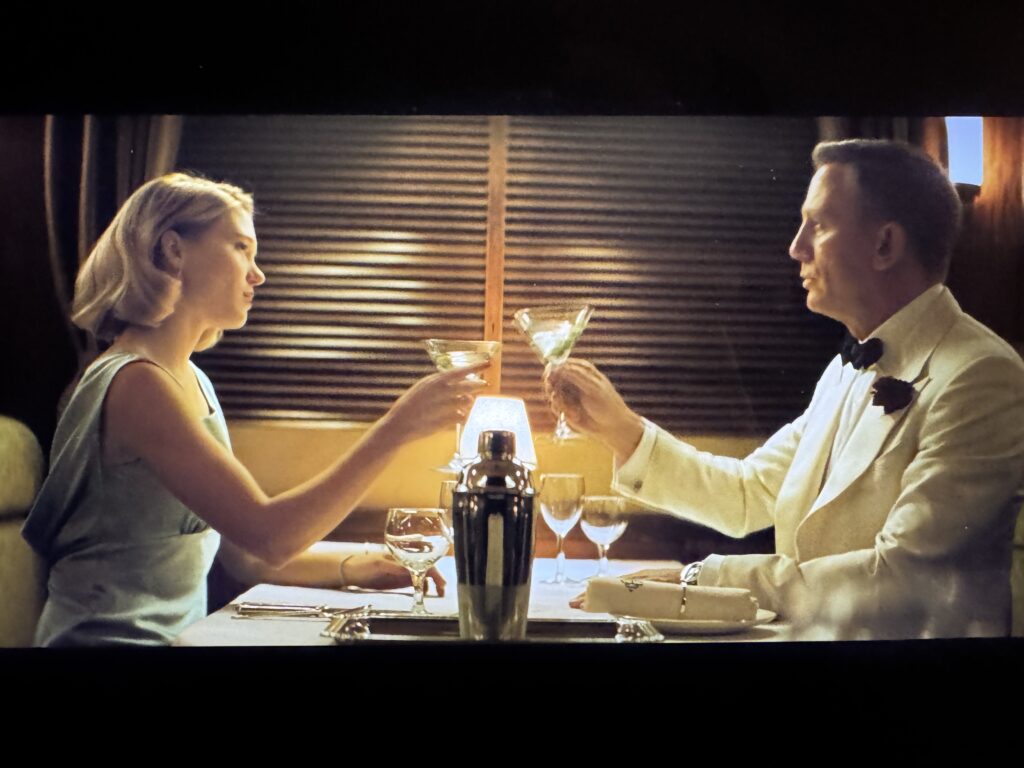
Now onto the main Bond girl of this film: Dr. Madeleine Swann, played by French actress Lea Seydoux. A primary criticism of Swann, and one I share, is that her romance with Bond feels very forced and not well-earned. It is for that reason that I think she is less liked overall. However, forced romance aside, she still has agency and decent back-story. Unlike Vesper, who I likened to a manic pixie dream girl, Madeleine is well versed in the spy world thanks to her dad and we see her navigate the story independent of Bond’s arc. She is capable, but also desires her own life free from the consequences of this life. I think she only falls for Bond due to her own daddy issues, because it’s the only things which seems to make sense. There’s a sort of tension that she resolves by seeing Bond as a surrogate father and lover. But why does Bond fall for her, that’s the part of this which makes less sense. Craig and Seydoux also lack the chemistry of a Brosnan-Marceau or Craig-Green— even the wooden Dalton and his much more competent actress paring in Diana Rigg feels more sincere. Overall of all of Bond’s loves, the Bond-Swann relationship feels the least convincing. Since that is Dr. Swann’s primary reason for being in not one, but two films, she gets a lower ranking of 4/10 overall.
Monica Bellucci is really almost a throw-away Bond girl here, given about as much screen time as Berenice Marlohe in Skyfall. She is used for information and passed along after sex. Yet, she has far more chemistry with Craig than Seydoux, but then again she is a veteran of cinema so I suppose that’s to be expected! 5/10 – neither good nor bad, but incapable of a higher ranking due to her screen time.
So between the worst Blofeld, and a disappointing outing for our main Bond girl, who lacks chemistry with Bond, and saved only by a decent sub-villain in Max Denbigh, this category earns a middling 5/10.
Wildcard!
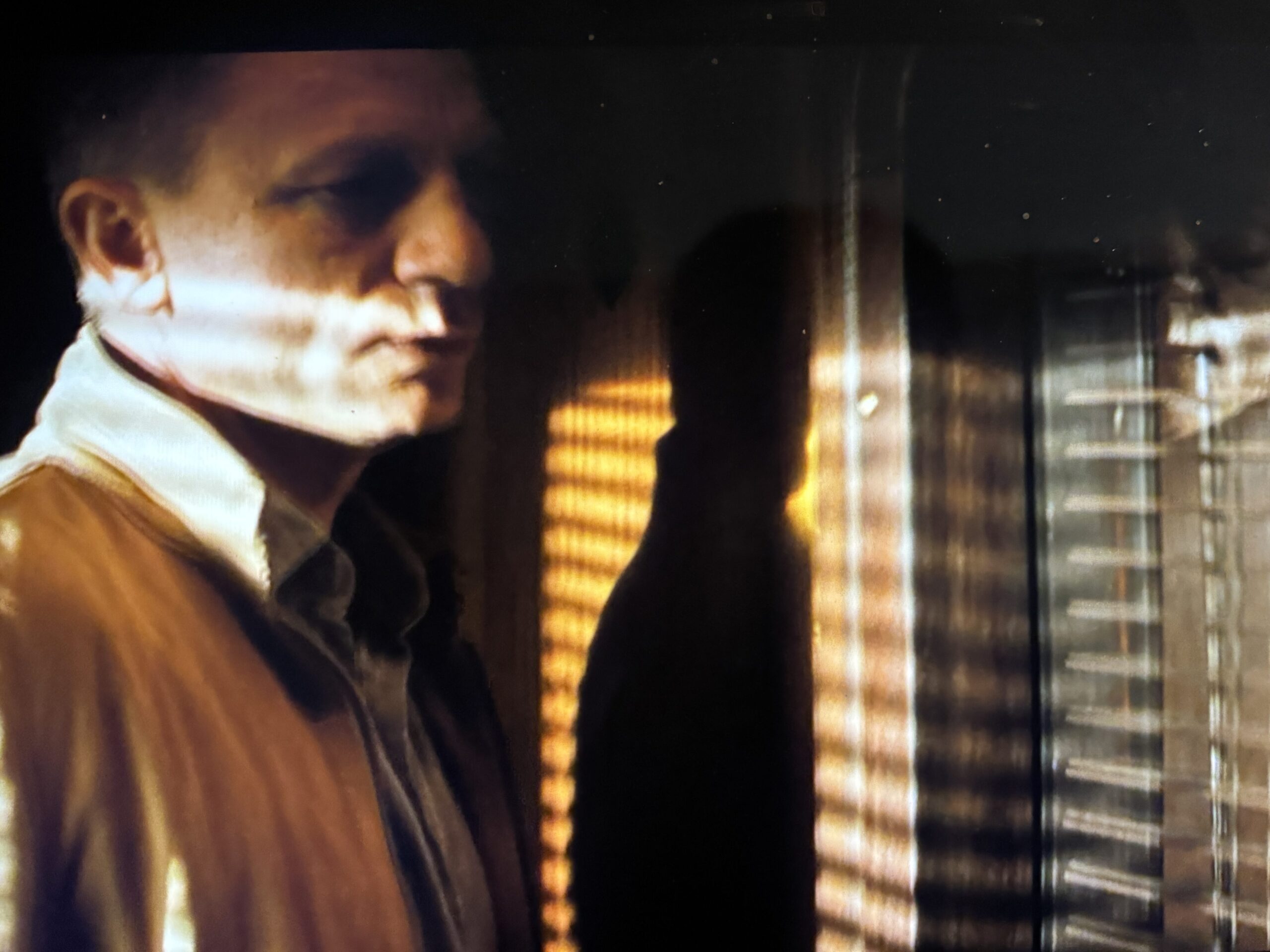
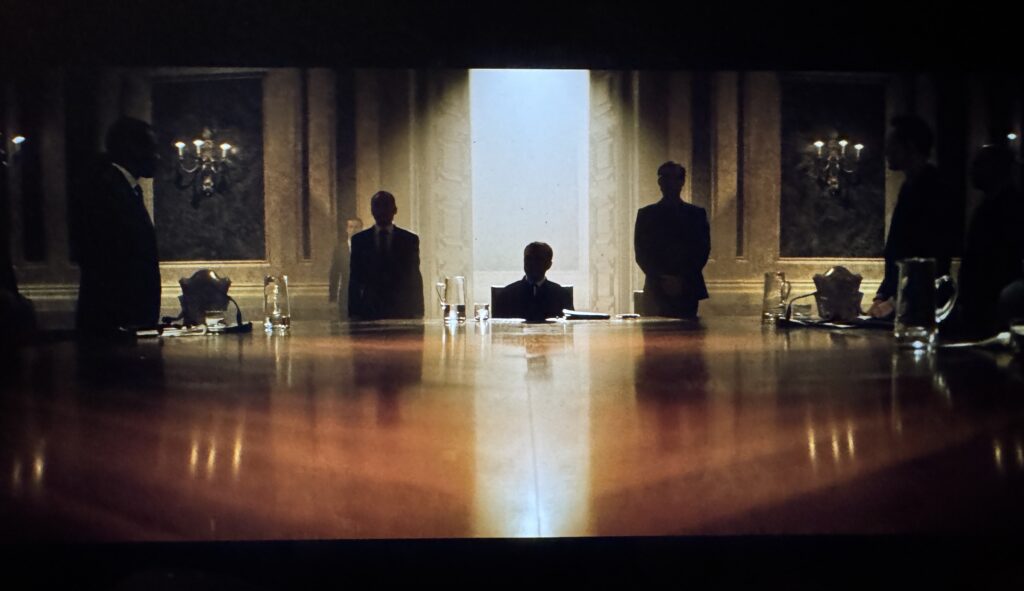
Many feel like the Craig era is often style over substance. We get two films directed by Mendes, with two outstanding cinematographers. As a result we get some incredible visual story-telling, which also to some feels too pretentious for a James Bond film. I don’t think that is fair, provided the visual language we get still builds on top of the Bond formula. SPECTRE is arguably the only Craig era Bond film which does use the established series formula, following the critique by many long time fans that the first three outings lacked much of that plus the shallow fan-service deployed by Skyfall. I think this film really does a good job with fan service by way of easter eggs. It is less overt than the DB5 reveal in its predecessor which feels like little more than a way to illicit claps in the movie theater, and therefore the approach here is a more sophisticated and refined one.
That’s exactly how I think of this film overall. In spite of story fouls, and villains that share in those bad screenplay decisions, the film is a well-crafted example of Bond formula done right. The opening credits sequence may feel a lot like style over substance, but does every opener need to be a 14 minute boat chase along the Thames? This moment still incorporates a thrilling fight aboard a helicopter following some great immersive filmmaking via an elaborate tracking shot. It felt epic the way a Bond pre-credits sequence should. As for the oft criticized darkness of this film, that is the narrative decision by Mendes and his cinematographer Hoyt Van Hoytema. While it may feel a stark departure from Deakins’ bright color palette of Skyfall, it is nonetheless still striking. The shadowy theme of always being watched called for a film in the shadows and that is what Van Hoytema delivers and Mendes portrays. It is done supremely well, and when you consider the look of this film alongside its Orwellian theme, it really works. 8/10 for another visual storytelling masterpiece that only avoids perfection due to its narrative story.
Conclusion.
I am not alone in my belief that SPECTRE is not only a good James Bond film but that it is better than its more popular predecessor. It was Quentin Tarantino who said of Sky Fall vs. SPECTRE: “I didn’t really care for Skyfall but I duuuug SPECTRE! I thought Sky Fall was like… wait this whole movie is ending in a fucking shoot-out in a fucking cabin?! This is a James Bond movie?! What the fuck is this wanna-be Straw Dogs bullshit?! And a fucking farmer is helping him out?! This isn’t James fucking Bond! From the opening action sequence on in SPECTRE, I’m like, ‘now this is a James Bond movie!’”
I couldn’t agree more and I would love to see where this film winds up in future retrospectives given time… which is why I award this film a good rating of 6/10 overall, putting it in the middle of my films in a decidedly controversial place. I liked revisiting this film, and I suspect that I enjoyed it enough that I will continue to like revisiting it when in a Bond mood.
Discover more from MK Leibman Writer
Subscribe to get the latest posts sent to your email.