About as classic Bond as it can get, down to the iconic theme by Shirley Bassey, Goldfinger is often right at the top of most lists, both subjective and objective. Yet, if you browse the James Bond subreddit, you may start to see some more contrarian opinions about the classic taking shape. While nobody is arguing it’s a bad film, by modern sensibilities it can feel a bit dated and dull. Are these criticisms fair, or is it safe to say that Goldfinger is still certified gold in my view? Let’s dive in!
Setting & Story
Setting
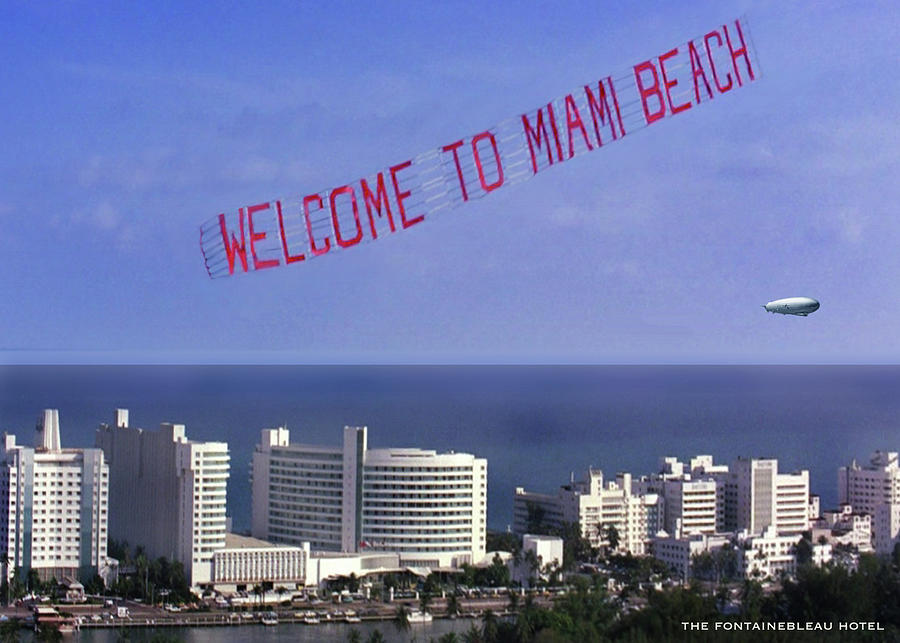
Our film opens after the credits with John Barry’s score number, Into Miami, which is a great brassy mid-century jazz bit which reveals our poolside stay at the iconic Fontainebleau Miami Beach hotel. Added to the national register of historic places in 2008, the film celebrates its architectural achievements in 1964, with the hotel then only ten years old. It was designed by Morris Lapidus, who helped popularize the Miami architectural scene and the “Miami modern” movement. While it now feels like a time capsule, at the time of of filming this was a hyper futuristic masterpiece. It remains one of the most iconic use cases of architecture in a Bond film and to this day it encounters visitors from all over the world, looking to take in the retro-futuristic charm of the Bond film. Beyond our Miami introduction to Bond, and our main villain, we also get immersed in the alpine roads of Switzerland. Before long we are back to a less charming version of America, the suburban sprawl of Kentucky, set between strip malls and convenience stores; this is the usual portrayal of America in Bond films, hyper crass and materialistic. In fact, cue the George Carlin skit about America being one big giant shopping mall. While we may not get iconic lairs like a floating palace or subterranean volcano, we get some very memorable scenes. 7/10
Story
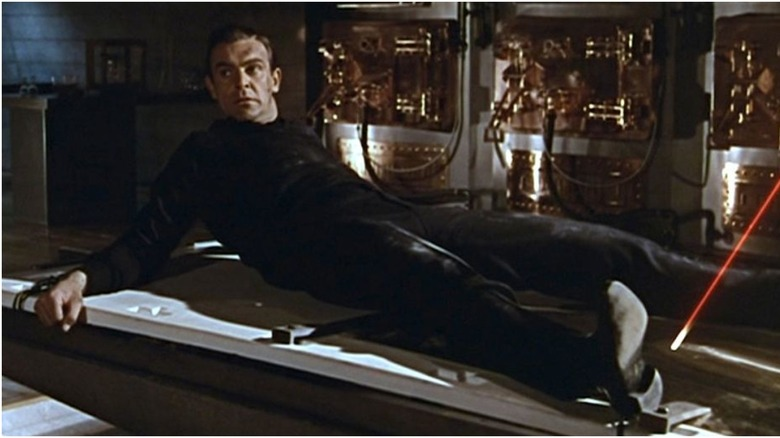
In today’s day and age most of this plot would be considered beyond believable, straining credulity like Skyfall, where the impenetrable MI6 is bombed by a computer hacker. In 1964 this story, specifically Auric Goldfinger’s operation Grand Slam, is barely believable.
Bond is sent to track down supervillain Auric Goldfinger (Gert Fröbe), an extra-national plutocrat who would today rival Elon Musk for both the title of richest man in the world and least likable loser. Bond discovers that Mr. Goldfinger’s name is well earned, if not only for his takedown of Jill Masterson in the iconic gold paint scene, but for his primary modus operandi: gold smuggling. Despite all of his wealth, still it is not enough. Goldfinger teams up with Chinese agents to secure for himself a nuclear warhead. He uses the mafia to set up his actual target: Fort Knox, the home of America’s gold supply and world’s toughest bank robbery target. Bond is eventually kidnapped by Goldfinger and his quiet but lethal henchman, Odd-Job. After talking his way out of certain death by a Dr. Evil laser beam, Bond is sent to America where he can be closely monitored by Goldfinger (he can’t be sure how much Bond knows about operation Grand Slam). Turns out Bond knows nothing, but since this is a Bond film, we will get a good third act exposition dump from our villain before a captive audience: every mob boss in America (& Bond listening discreetly beneath a replica model of the scheme). Pussy Galore will take her flying circus and stun the entire surrounding area around Fort Knox with nerve gas. Then Goldfinger will take his opportunity. Or so we are led to think. Over some Mint Julep cocktails, Bond pokes holes in Goldfinger’s plans only to realize robbery was never Goldfinger’s intention. Instead he plans to make America’s gold supply radioactive for 58 years, thus creating economic chaos for his Chinese pals to benefit from, while also increasing the value of his own gold reserves. Naturally his plans are spoiled, as Bond pleads with Pussy Galore to reconsider. Bond is taken to Fort Knox and chained to a nuclear bomb. However, just as we are certain to see our hero go up in smoke, we learn the nerve gas never worked— it was a dud and Pussy Galore alerted Washington. Bond has a final electrifying showdown with Odd-Job, and the military secure the facility. All is well, except for one final scene aboard Pussy Galore’s jet where Goldfinger is dispatched of via explosive decompression.
Like many Bond films where the plot feels larger than life, this one absolutely strains credulity. However in an age long before satellites, and modern tracking, it feels only just possible to isolate a secure target with a brief moment for successful exploitation. Still the facility feels awfully easy to break into; a blast at the gate, a quick use of the Dr. Evil laser on a garage door, and they’re in and off into the vaults like using the elevator at the Fontainebleau hotel lobby. It’s all a bit contrived, but again we overlook this for the spectacle it offers us.
Some other contrivances are more head-scratching. Take the notable plot hole surrounding the mafia dons. Gathered around the life-size replica scale rendering of his plan (just so investigators can later easily put the pieces together) Goldfinger explains that the mafia families can each collect ten million dollars instead of the one million owed to them for their services to date. The catch? Help him rob Fort Knox. All but one family is in, with Mr. Solo the solo man out (he is dispatched in a rather elongated scene with a car crusher). Before we can ever learn what role these mafia men will play, or what they actually did apart from a vague reference to some shipping logistics, Goldfinger takes them all out with nerve gas. Viewers including myself are left wondering what the point of this all is. I can only surmise that the mafia scene is shoe-horned into our plot to allow Goldfinger his chance to exposition dump his plans to the actual audience: us. That, and Mr. Solo is the vehicle (literally) for Bond to deliver a note via his tracking device to the CIA. Nonetheless I feel like this could have bene handled better. Perhaps the exposition scene is via Goldfinger reviewing the final details with Pussy Galore and her flying circus. After finding Bond running about out of his cage, Bond plants the tracker on Ms. Galore, who he later convinces to turn heel anyways. So since the CIA message is never received it’s not that important to the plot unless you really were eager to see four minutes of hydraulic press action.
Another common criticism I see often aimed at this film is its pacing. While I can agree with the plot contrivances, I cannot agree that this film is tonally poor. Many feel that the film drags after Bond is captured following an exciting car chase through Goldfinger’s metallurgy plant in Switzerland. While the action is definitely toned down until our finale, I don’t find these scenes boring at all. We instead switch from Bond in action to Bond in espionage mode. While some of this is also Bond switching up the charm as “an esteemed guest” of Mr. Goldfinger, quite a bit of it is intelligence gathering as well. None of it feels especially boring to me, and all is in service to our over-arching plot. To me the film is gripping and exciting from start to finish. It is after all a film made in the 1960s, decades before hundred million dollar budgets with state of the art CGI (not of the tsunami surfing variety). So to some modern audiences the film can feel slow, but that is typical of 1960s films. There is only so much money to go around for major action set pieces which actually relied on practical effects and extensive camera work.
So where do I rank the story of Goldfinger? I still think in spite of some of its contrivances it is still enjoyable. The convenience of the writing doesn’t take me out of the film the way the plot holes and lack of believability take me out of Skyfall for instance. I also think it could have benefitted from another pass at the script. Otherwise this film still largely holds up on rewatch, and gets a solid 7/10 story wise.
Overall this category earns an impressive but not top tier 7/10.
Gadgets & Vehicles
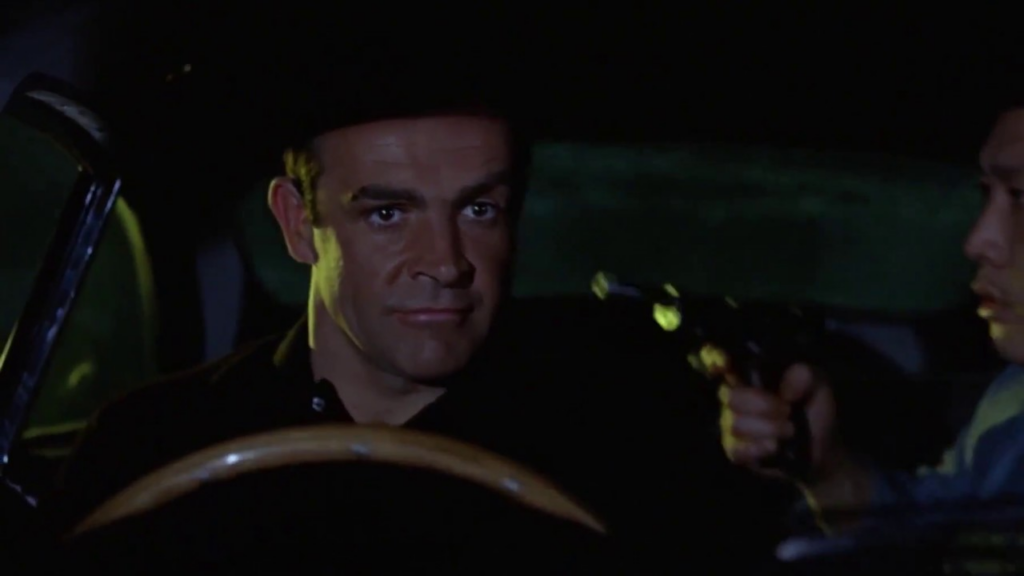
Goldfinger is really where we start to see the Bond formula perfected. In this outing we see Bond equipped with standard spy-fare for the era, but he also receives a well equipped Aston Martin DB5, set up for a great chase in the Alps. We also get some great exchanges between Bond and Q in the introduction to the vehicle. It’s the first time we see this sort of banter, and interaction. For that reason alone, this category gets an iconic 10/10.
Action Sequences
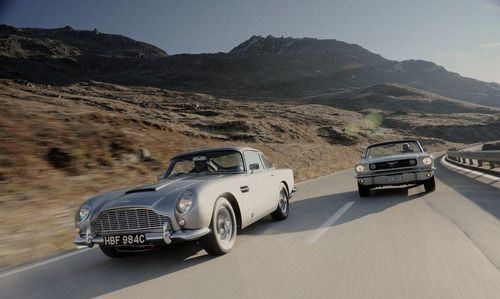
As mentioned in my story section, the action of early 007 films is somewhat limited by its era, notably the reliance on practical effects, and budget. However, unlike the Hitchcock treatment we get in From Russia with Love, this outing really ups the ante in terms of what it means to be a Bond action set-piece. The car chase in the metallurgy facility is a stand out in the series for the blend of humor and creative evasion employed by our hero. We get to see Bond not only rely on his instincts, but also his Q-branch gadgets. Prior to our chase in the factory, we also get Bond utilizing his cars gadgets against a would-be assassin (or rather, assassin with very bad aim).
Our finale is typical of the final show-down equipped with lots of cross fire and countdowns to calamity. In many respects, this sort of action can feel stale given all of the similar action finales across the franchise, but since this was 1964, it was really the first instance we get of it. It sets the template or formula if you prefer. Dr. No ended with Bond’s creative escape after a physical showdown. From Russia with Love ends with a rather dull boat chase with the world’s dumbest henchmen (who stop amidst Bond’s oil drums) before culminating in a memorable hotel showdown between Bond, Tatiana and Colonel Klebb and her poisonous shoe. This is the first big blockbuster showdown we see in the franchise.
So for its memorable impact on the formula, and in spite of a second act which is largely devoid of any action (instead favoring spy games), it scores highly: 8/10 for its enduring legacy on the franchise.
Villain and Bond Girls
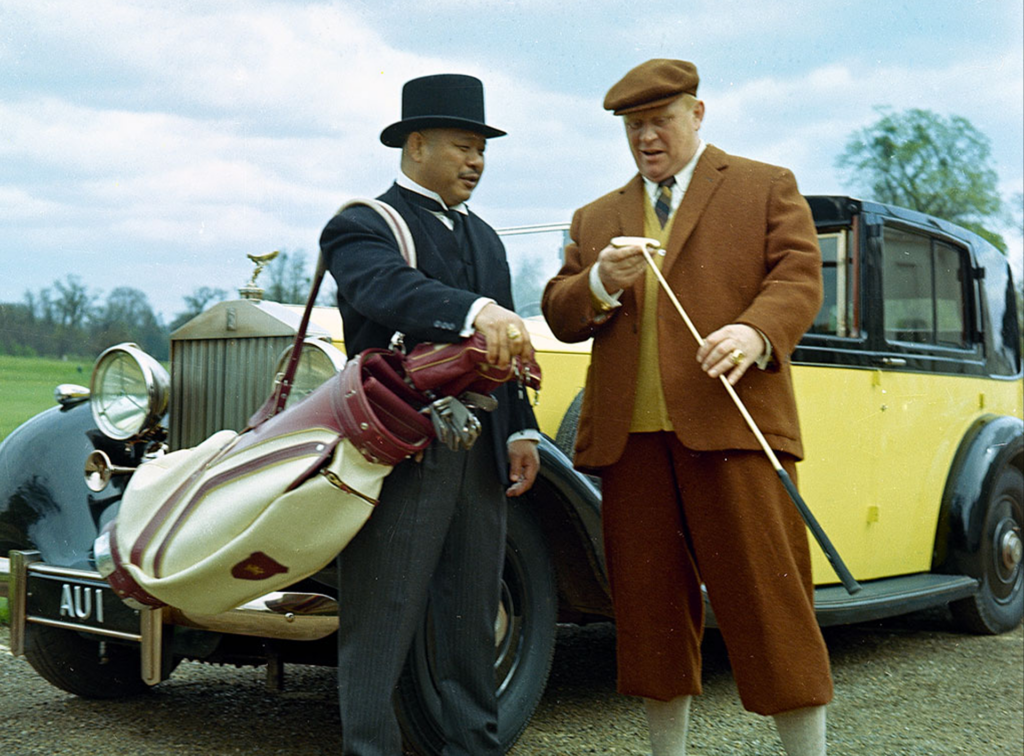
While I still plan to do a ranking list, I will come out and say it: Auric Goldfinger is the quintessential Bond villain. He feels more grounded than Blofeld, and is an excellent allegory for modern plutocrats obsessed with gaining even more wealth in spite of what they already have. He is a malignant narcissist with an outsize personality, with his fingers in everything (he owns golf clubs, Swiss compounds, horse racing farms, metallurgy facilities etc.). In many ways he feels like the Donald Trump of his era, down to his tacky love of all things gold. When people call Besos or Musk a Bond villain (or Trump), it is because Auric Goldfinger established those qualities as prototypical of Bond villainy. While Blofeld is also an oft parodied megalomaniac villain, we see many different portrayals of him, including different motivations. In many ways I wish that Goldfinger survived so we could have gotten more of him. Blofeld feels more like a terrorist, more concerned with the political messages he wishes to send along with the financial benefit it will provide him and his organization, SPECTRE. Goldfinger is not a terrorist in that his primary motivation is pure greed. Any political deal he makes is for his own benefit, not any political point. This is an important distinction between the two villains, and it is an essential difference for the allegory it makes when commenting on the absurdity of unregulated capitalism, greed and wealth inequality that remains especially relevant today. 10/10, he is the very best.
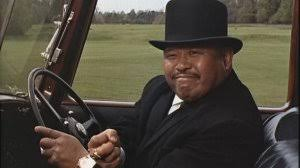
Not only is the villain arguably the best of the entire series, so too is his henchman, Odd-Job. Often a toss-up between Odd-Job and Jaws in terms of most memorable villainous sidekick, Odd-Job slightly edges out the latter if only because he was the first. Red Grant is certainly an imposing henchman in the previous outing, but he is still human despite seeming to possess unnatural strength. He also lacks any defining characteristics. Whereas Odd-Job is not only of superhuman strength (crumbling golf balls, and karate chopping metal rods) he also possesses a trademark: his hat. Trademarks become an important aspect of henchmen creation in the series only following the success of this film. None are quite as iconic as Odd-Job and his razor-brimmed hat. Making him feel all the more menacing is the fact he doesn’t even speak. Harold Sakata makes Hollywood history for his role as a villain sidekick so memorable it is parodied, paid tribute to and immortalized in popular culture to this day. 10/10
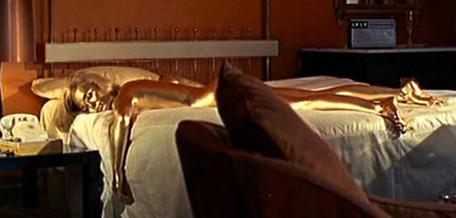
Our two Bond girls, Jill Masterson and Pussy Galore are also standouts in the series. While we only get a few scenes with Masterson, as she is primarily a plot device devoid of any agency, she gives us one of the most memorable and lasting images of the entire franchise: her dead corpse painted in solid gold.

Pussy Galore (Honor Blackman) is introduced to us first as a villain. She is a capable pilot who runs Pussy Galore’s Flying Circus (I must be dreaming). Her plan is to deliver the nerve gas agent for Goldfinger’s plans and make out with a respectable sum for her participation and a hopeful retirement to the Bahamas. Of course Bond tells her Goldfinger’s true intentions: to nuke the place. This scene between Bond and Galore in the barn where he informs her of Goldfinger’s duplicity is really hard to watch. Up to this point Pussy Galore is presented as a head-strong, confident and capable woman (even adept at karate). Yet we get this very uncomfortable rape-y scene where Bond commandeers Galore, who is fighting back as he pushes himself onto her before she begrudgingly gives in. There is no other way to describe this scene other than sexual assault. Even in 1964, I can assume many women and quite a few men would find this uncomfortable to watch and so I don’t think this is purely about modern sensibilities around consent. I don’t want to see Bond behaving like this, even if Sean Connery is known for his views about slapping around women. Nonetheless Galore is a woman presented with agency in service to the plot but also playing a bit of a tribute to Amelia Earhart and the American Fly Girls. She’s terrific, even if she had to endure that awful scene in the barn. An absolute legend and standout of the series, she too gets a 10/10 and is among my very favorite Bond girls of the franchise.
No surprises here, this category is perfection. 10/10.
Wildcard!
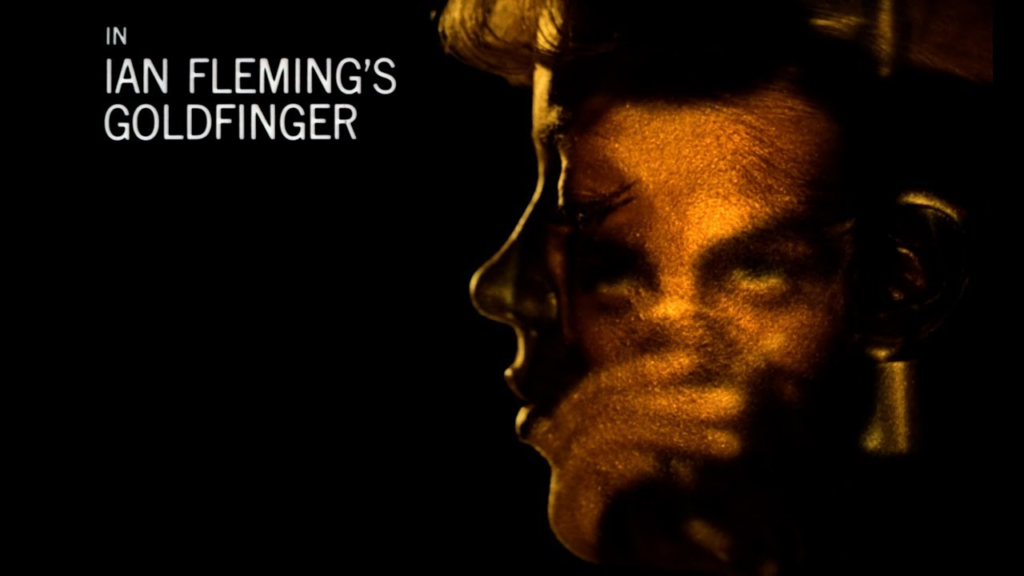
This film is, as mentioned throughout this retrospective review, the one which really perfected the Bond formula. Started by Dr. No, before heading in a different creative direction with the Hitchcock tribute in From Russia with Love, Goldfinger picks up on everything Dr. No did well, and ups the ante while adding to it.
In this film we get the following formula ingredients for the first time:
- Megalomaniac Bond villain with global scale
- Iconic henchman with a unique defining trait
- Bond girl who is not just useless, but has talents and agency to help Bond
- Q-branch provides quirky gadgets and Desmond Llewellyn’s trademark banter with Bond
- Action scenes built around humor and Q-branch creativity
- A plot so outlandish it is barely believable
In this film we also get the following legendary imprints on the franchise:
- Shirley Bessey’s theme song, which will be emulated in tone throughout the series
- Iconic opening title credits which incorporate the film’s theme
- Jill Masterson, dead on the bed, painted head to toe in gold paint
- The use of the Aston Martin DB5, fully equipped by Q-branch
- Odd-Job and his flying hat
- The gold-silhouetted woman that would become a logo for the 007 franchise
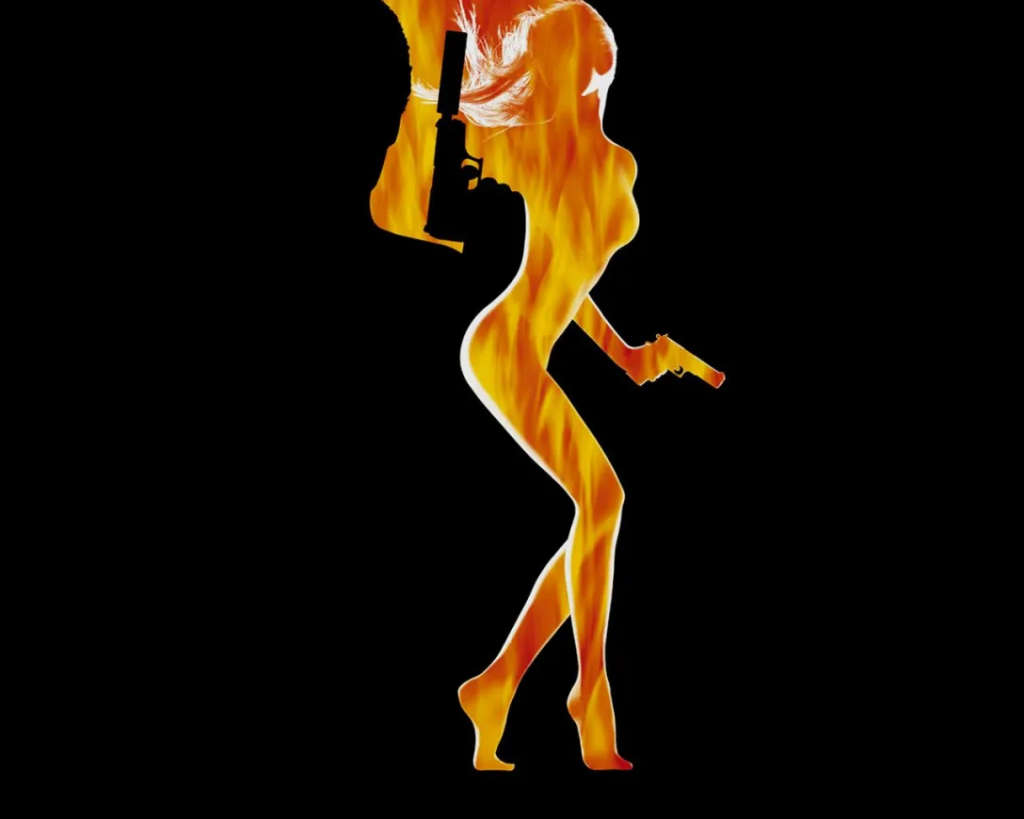
For the imprint it has not only on the Bond franchise, but popular culture overall, this wild card gets another 10/10.
Conclusion.
Despite a plot with some contrivances and dated takes on women, this film still holds up well. There is a reason it scores so highly on both subjective and objective rankings of the Bond film franchise. It is in my opinion the best Connery Bond, and also a film which defines Bond cinematically. While there are a few small details holding it back from perfection for me, I still think it earns its stellar 9/10 overall rating.
Discover more from MK Leibman Writer
Subscribe to get the latest posts sent to your email.