I haven’t exactly made a secret of my dislike for the Craig era of Bond. However, even among those who dislike the tone and darkness of this era, Casino Royale still often stands alone as one of those outings that is universally considered to be an excellent entry to the long running franchise. I do want to add one caveat: is it really fair to judge Casino Royale against other stand-alone films of the series considering it is an origin story? Allow me to elaborate… is it really just another Bond film, or in many ways is this sort of a confined story, unique in its approach and therefore working with a narrative advantage? I’d argue yes, and so that’s why I will take that into consideration. Nonetheless, I consider this the only truly decent entry in the Craig run (I have yet to review SPECTRE and Skyfall has fallen apart for me on rewatches and I refuse to ever watch No Time to Die again as it is as dead to me as Bond is dead in it). So will this film give Goldeneye a run for its money in my subjective ranking? Let’s find out…
Settings & Story
Setting

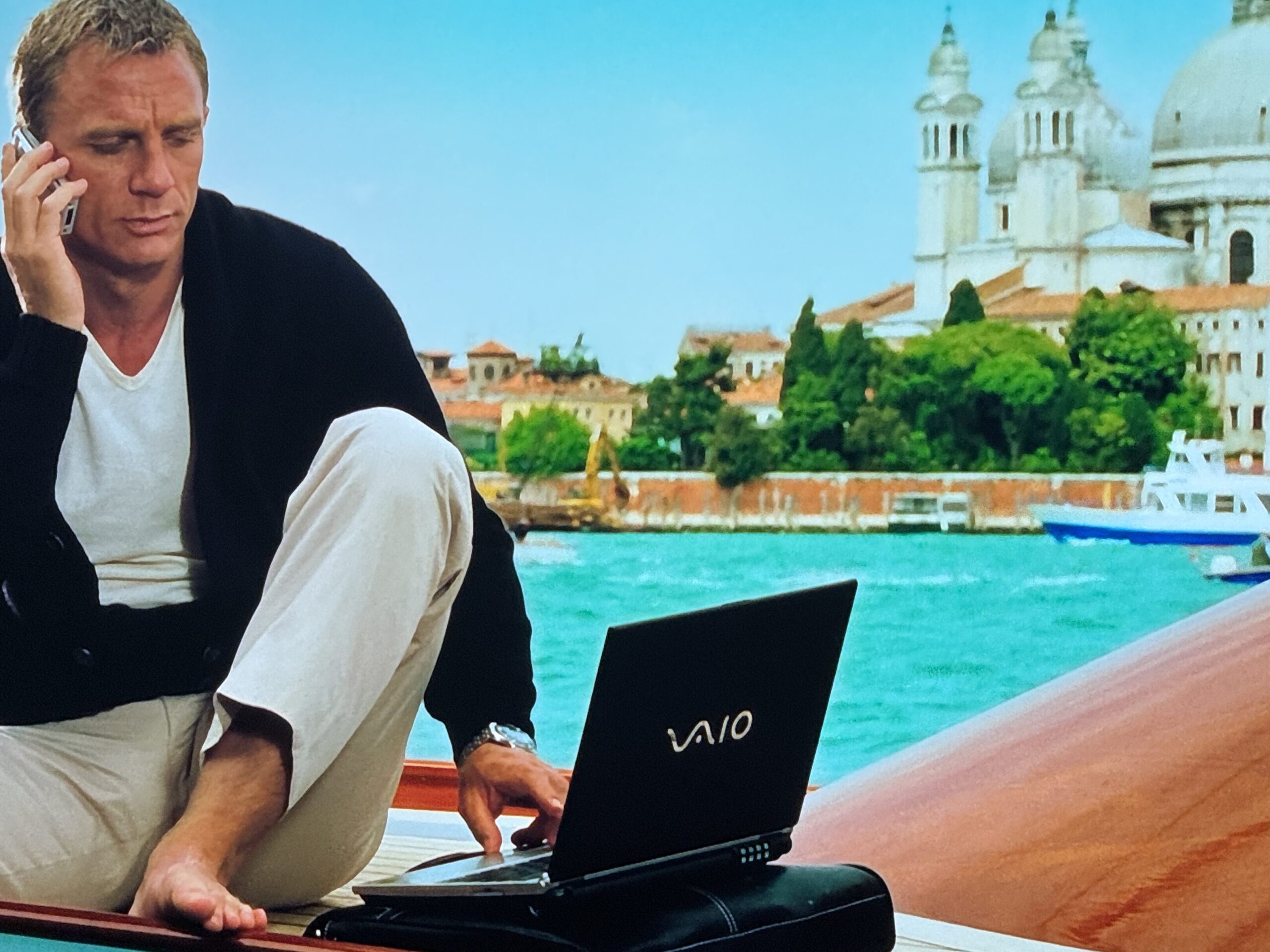

This globe-trotting film is absolutely gorgeous to look at. When I think of this film, I can vividly recall various settings from the movie in great detail, especially the Lake Como villas. Like Octopussy which I just reviewed, Casino Royale does a great job of immersing you in the extravagant wealth of the world of James Bond. Only Casino Royale does it much better, a more toned down approach which feels like you are actually being transported along with Bond to this adventure as opposed to feeling a bit like a slack-jawed spectator. We know we are looking at the societal upper crust of the upper crust. Even the less glamorous locations, such as the iconic rooftop/crane chase in Africa are extremely memorable. The only thing setting this film back is its abandonment of core Bond formula. That is evident in the lack of iconic locations, lairs or settings. It lacks the creativity of other Bond films in preference for a more grounded approach which consequently makes this film feel like the settings could just as well apply to a Mission Impossible or any other glamorous action film. Beautifully filmed, and immersive but falling short of the Bond formula, this portion of the category is a solid 8/10.
Story
Casino Royale is a very faithful adaptation of the iconic novel of the same name. Largely inspired by the successful origin story of Batman in 2005, the film attempts to do much the same in tone, style and approach with Bond. Series veterans, Wade & Purvis return to script-writing duties alongside Paul Haggis. It was the latter who came in to do re-writes which substantially toned this film down from its Bond elements, upping the emotional arc with Vesper as well. The result is a film that is very much absent most of the Bond formula, rebooting the series in a way that abandons Bond fantasy for stark realism.
Does it work? The way I look at Casino Royale is as an origin story. This is the film where Bond becomes Bond, so I am a bit more forgiving about the absence of Bond elements since this is a hard reboot. However, knowing what follows is also what leaves me a bit jaded about how successful this approach was.
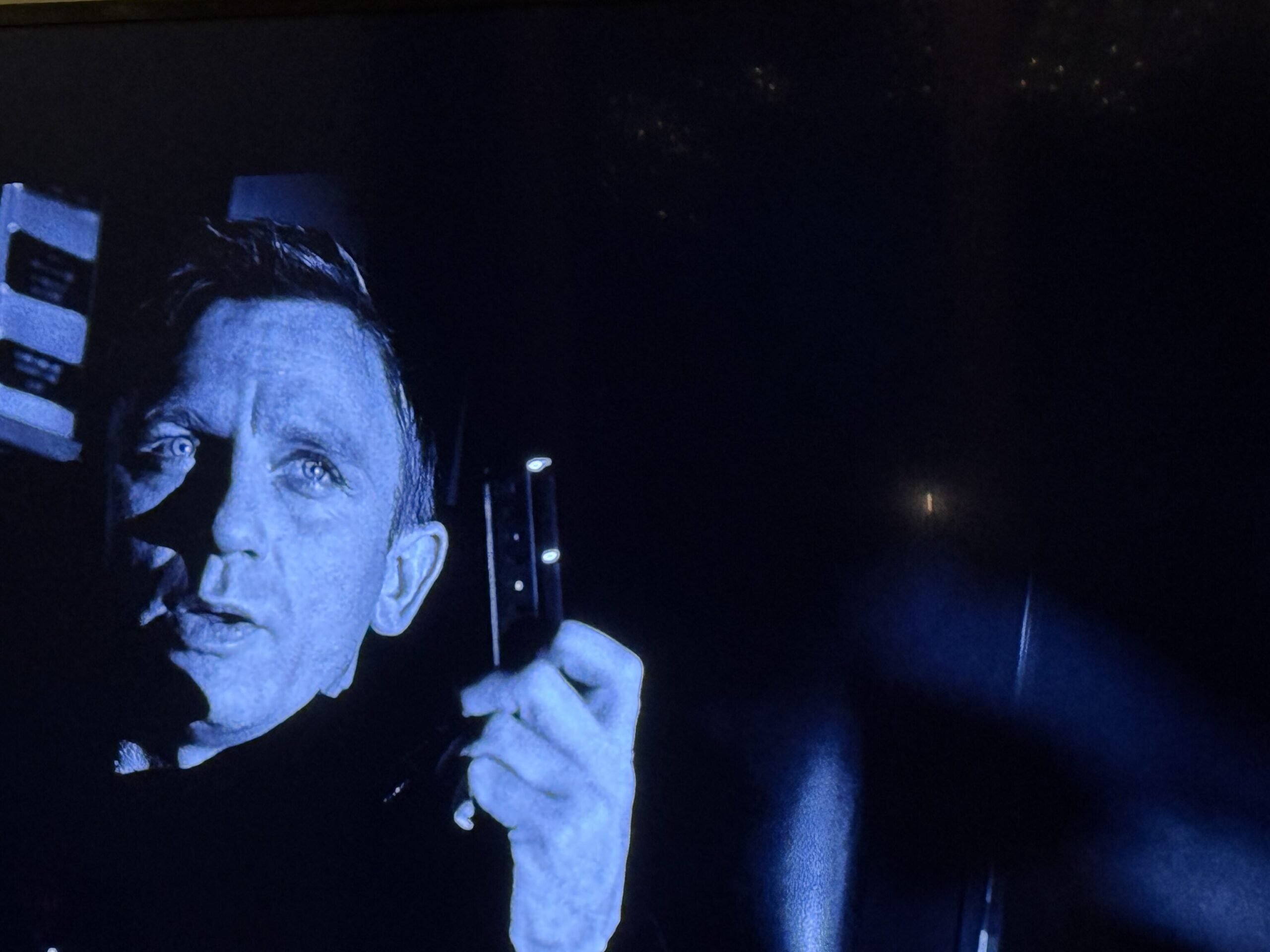
We begin our film in stylish black and white, where Bond earns his license to kill in Prague. It’s a statement scene, indicating that this Bond is not only different but dare I say, auteurish. Bond is physical, dour and he even throws out old Q’s advice of “never let them see you bleed.” The film is absent any gadgets, humor or trademarks that make you feel like you are watching a Bond film. The first half of this film moves at a frenetic pace, with tons of excellent action and plot advancement. Bond is then approved to challenge math genius and terrorism financier, Le Chiffre (Mads Mikkelsen) for a game of poker, accompanied by the beautiful MI6 accountant, Vesper Lynd (Eva Green). We meet who will become familiar faces in Felix Leiter and Richard Mathis, also on the tail of Le Chiffre and his international terrorism money operation.
Annnnd then we spend 20% of the film’s runtime around playing poker (yes that’s a precise figure, I calculated it). I understand that this casino sequence is all about building tension between Bond and Le Chiffre, but it does get a bit boring at times, especially if you don’t understand poker and therefore fail to appreciate what is actually going on. Nonetheless even if you don’t understand the game, the tension is palpable. Both breaks are also built upon with action sequences and dramatic consequences as Vesper saves Bond from cardiac arrest. Finally the game comes to an end, Bond wins over $100m, causing Le Chiffre to panic over his debts owed to some terrorist pals. Le Chiffre captures Vesper and Bond follows to his trap where he is tortured, naked.
Before we can spend any more time with our bloody creep, he is killed by someone else after debts owed. The rest of the film is instead about Bond’s deepening romance with Vesper and its untimely end. Yes of course Vesper has just honey-trapped Bond to deliver for her boyfriend, an Algerian agent who was also in fact honey-trapping her. It’s a valuable lesson for Bond to learn who he can trust: no one. The experience leaves him even colder, realizing that in this world you cannot allow yourself to be vulnerable. The final scene shows Bond injure Mr. White (the man behind Le Chiffre’s organization) with a gunshot to the foot in retaliation for killing Vesper and stealing the money. He approaches the injured man (who will wind up in his trunk for the beginning of Quantum of Solace) and introduces himself for the first time as “Bond, James Bond” — and we finally get our iconic John Barry needle drop to accompany the reference. “Bond will be back…” Really because up until this scene he had yet to really arrive.
I think the story of this film is perfectly fine. It succeeds on what it is trying to accomplish, Bond’s trust lesson learned through ill-fated romance AND also Bond learning how to control his impulsivity in favor of instinct, a skill he will perfect over the Craig series of films. It’s a solid origin story as well as a solid action movie. It’s truly an outstanding film. But as a Bond film it leaves me feeling cold. We could have had the humor present and still narratively achieve a realism effect. Take for example License to Kill, another very dark entry into the series; this was a film where we see people’s heads explode and others get ground up in drug machines. Yet that film still elicits laughs, as with the bar brawl in Miami, or Q in the field. As dark as the Dalton films got, and as realistic as they were, they still knew when to dial up the humor or camp. We get none of that here. Bond is supposed to be an action-comedy series, and the filmmakers throughout the Craig era seem to have forgotten that.
Even in spite of my dislike for this era, I still have to respect the film for its near flawless execution. So for that reason this category still scores a near perfect 9/10 (losing perfection only because of its lack of humor that I find core to the Bond experience).
Gadgets & Vehicles

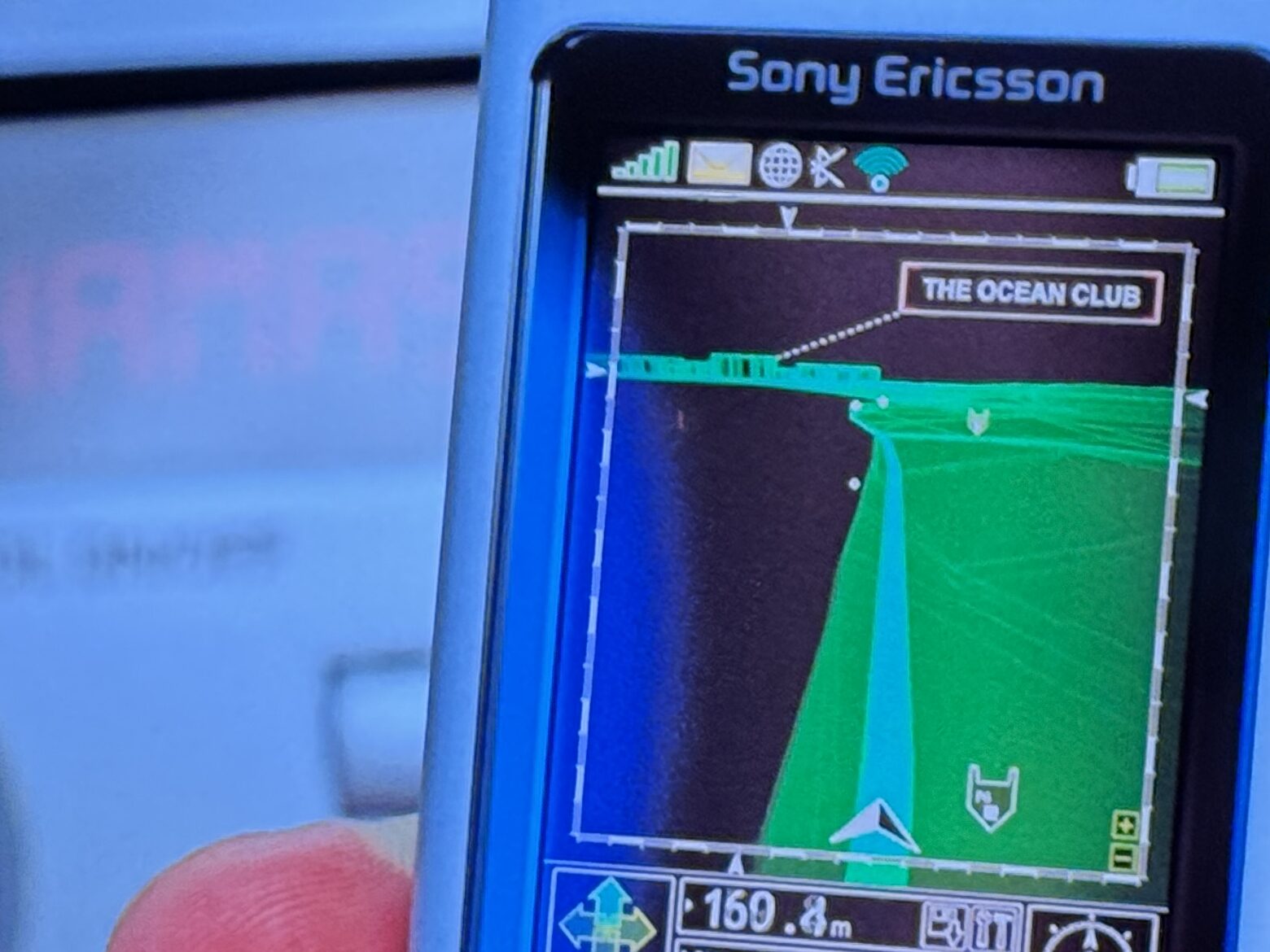
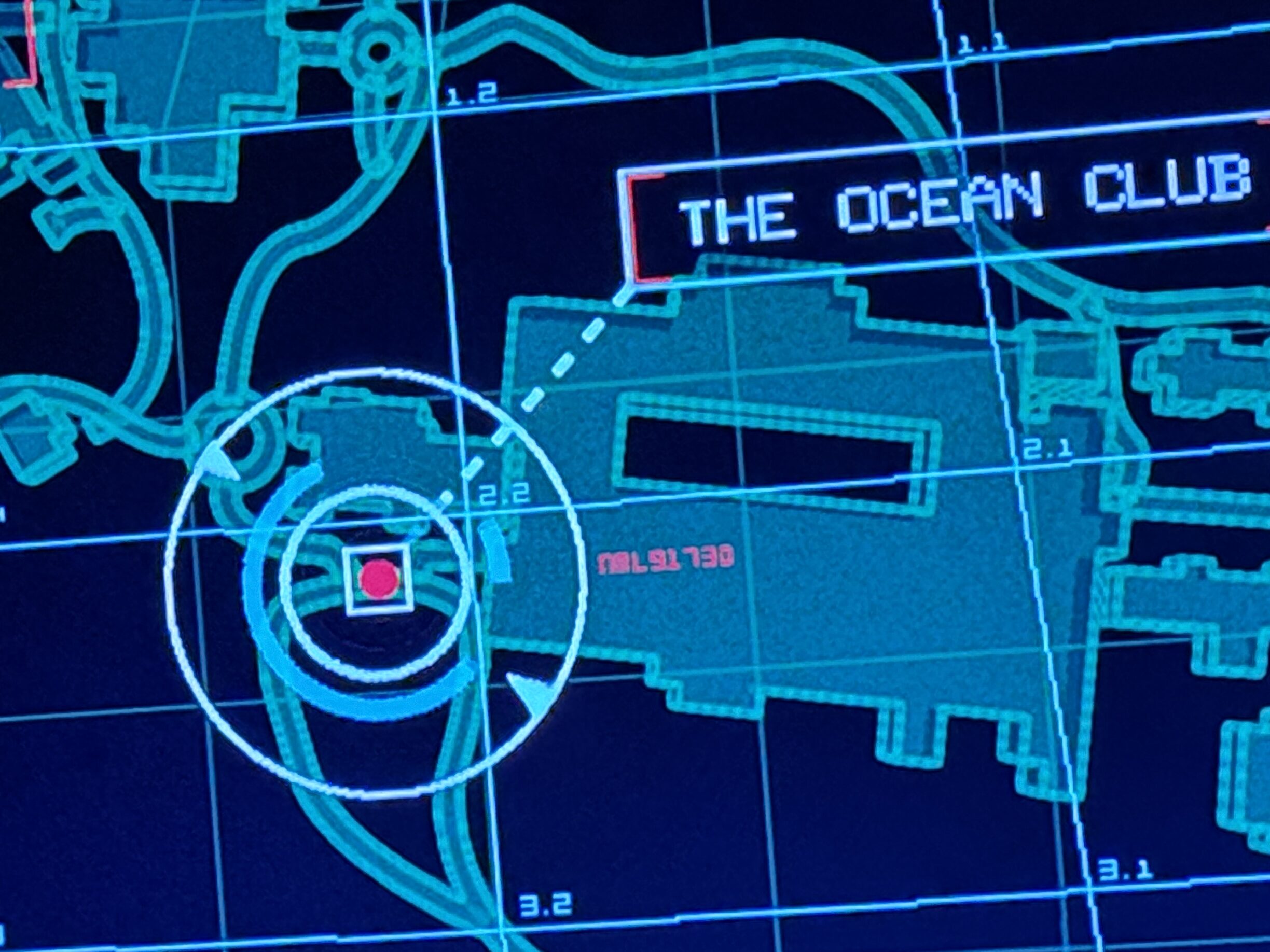
Many folks will say there are no gadgets in this film. That’s true in the sense that we get no scenes with Q branch. However, the film does do a good job with immersion using computers, tracking, and more standard spy-fare, even if it does leave you feeling like you’re watching a Mission Impossible film and not a Bond flick.
Our vehicles are what you would expect Bond to have in an origin story, the 1964 Aston Martin DB5 (as was also used in Brosnan’s first outing as Bond). He wins that one in a casino, so it’s hardly his. The second Aston we get is very much his, the brand new DBS of the era. It’s a bit more well-equipped with some fancy electronics and life saving measures that will prove invaluable. Alas, no missiles or ejector seats.
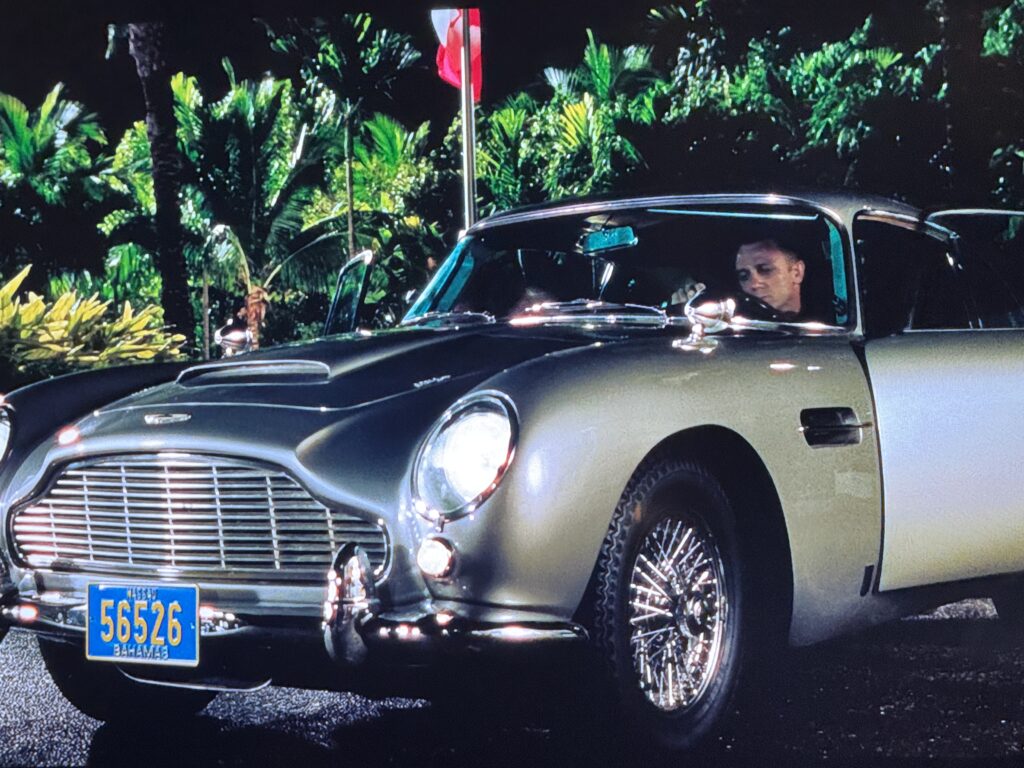
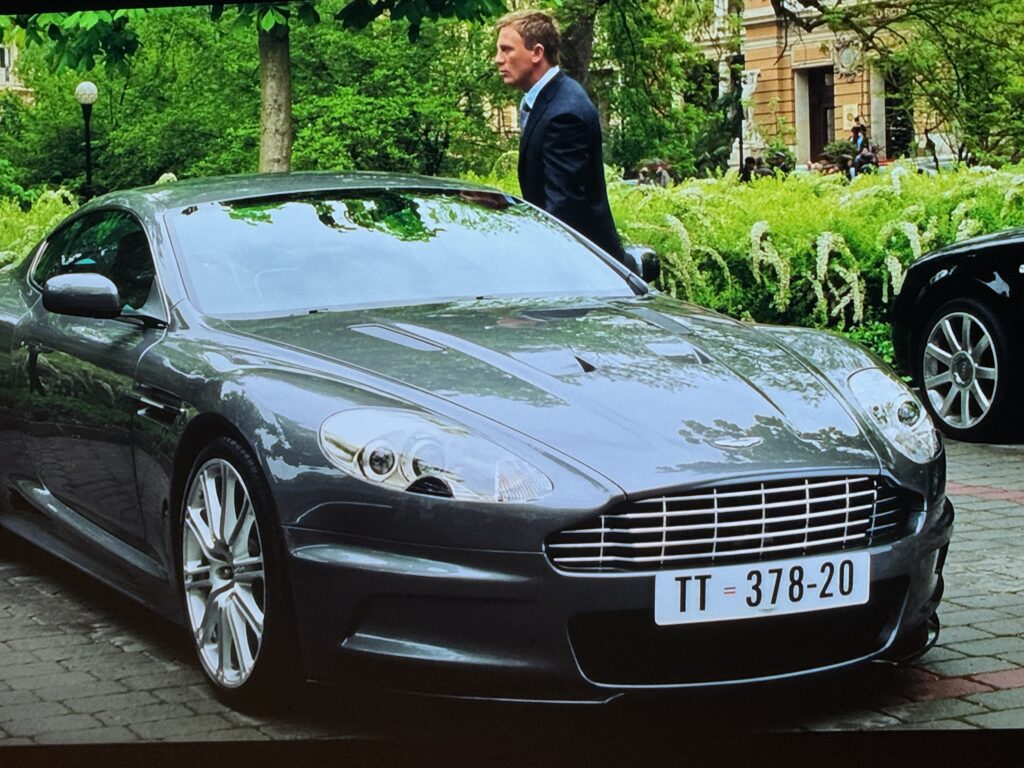
As an origin story where we have yet to meet Q branch, I can’t fault the filmmakers for not yet including a ton of sophisticated Bond gadgets. However, knowing where this series heads, even outright mocking the gadgets of old in Skyfall, I don’t like the trend it ended up setting.
All that said, it is an origin story which must be judged as such. It perfectly succeeds on its merits, and at least gives us some Aston Martin mileage, even if it doesn’t exactly hit it out of the park for me. 6/10.
Action Sequences
This film was directed by Martin Campbell, the man behind Goldeneye. Considering he only ever directed that new era of Bond, and this one, that’s a pretty illustrious Bond resume! If this film stands out for any reason, it’s due to not only the action direction but the direction overall.
This is a fantastic bit of filmmaking, and while it may feel visually like a film from 2006 (color grading, action style) that’s not necessarily a bad thing. I also feel as if every major action sequence has a definitive story arc. Let’s take a look at this more in depth…
The Africa rooftop / crane chase sequence.

Campbell does a great job of heightening the tension of every action sequence by employing a narrative arc via visual storytelling. We have our inciting incident where the chase/action is on. This builds to a midpoint atop the crane, where at this stage in the sequence our villain is coming out ahead and seems to briefly get away. Failure not being an option, our hero (Bond), must get inventive or creative to swing things back in his favor by fooling the man into thinking he has gotten away. This culminates in the villain realizing he has not won, continuing the action towards a final set piece at the embassy where the hero reigns victorious amid a ruthless takedown of an entire embassy without consideration (a narrative choice that will be spoken about critically by M later).
This sort of visual story telling is essential in action direction, and while indeed a formulaic approach it is also a tried and true approach to directing action well. By understanding the dramatic stakes of your sequence, you can pay attention to how to immerse an audience in action that is often devoid of any exposition or dialog. Martin Campbell does this to maximum effect in every action sequence this film offers. Let’s take a look at another standout…
Miami Airport chase sequence.

The same visual narrative is employed here as well. Bond tails a suspected terrorist through the airport terminal. Bond temporarily loses his mark, only for him to resurface, allowing for some creative instincts which then up the ante when the mark realizes he has not evaded Bond. This in turn leads to the chase along the airport runways, which sees Bond nearly taken out by both a baggage claims truck and approaching 747 (who thankfully commits to the go-around). Although we have no gadgets, humor or Bond score, we get a great bit of on-the-go thinking that we recognize as core to the Bond character we already know. Bond realizes there is a detonator on the bottom of the tanker truck. He is able to grab this device, and later clip it to the terrorist (we don’t see that part, we only see Bond take the device). When the terrorist goes to set the bomb off, believing it is still on the tanker truck where Bond is currently under arrest before the new jet, it instead blows him up off screen after a single shot of horrible realization that Bond tagged him during their physical altercation.
Both the Africa chase scene and the finale to the airport terminal chase end with outright brutality. It really sets the tone of the series under Craig, that not only is this Bond violent, bloody and without humor, it is a dark and hyper-realistic examination of the spy-world he occupies.

Even smaller scale battles, such as the iconic stairwell scene between Bond and the African henchmen sent to collect from Le Chiffre are as narratively impactful. The sequence undoubtedly takes influence from other close quarters combat scenes, such as the incredibly physical and brutal fight between Connery’s Bond and Red Grant in From Russia with Love. It is even framed with a tip of the hat to Hitchcock’s Vertigo with the stairwell view, our dead henchman fallen to the bottom. Of course this brutal takedown is witnessed by Vesper, who is deeply emotionally affected by watching Bond ruthlessly strangle a man to death, as we focus on his feet going still. It’s very well done, in terms of visual story telling which ties back into the narrative around Bond and Vesper, and their world’s colliding in romance.
While I may not like the lack of Bond elements in the action sequences, I cannot in good faith rate this category anything less than a 10/10.
Villains and Bond Girls
Villain
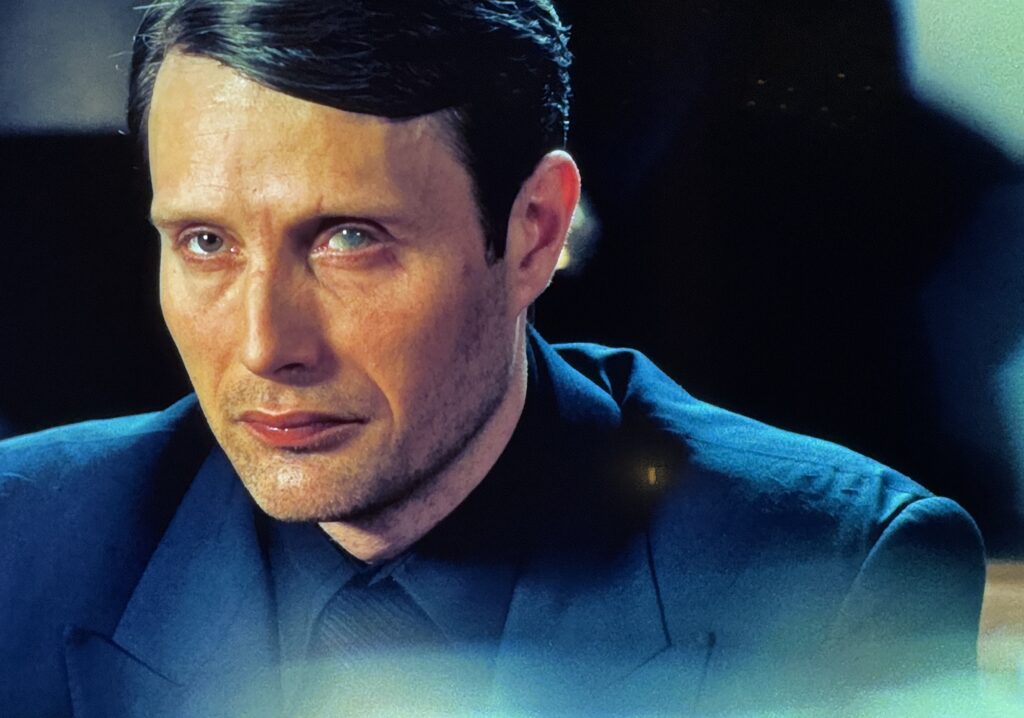
The main villain in this film is undoubtedly an all-timer. This is why it’s such a shame that he is killed off midway through the film, and not even by Bond. All that said, the depravity and ruthlessness is on full display in Mads Mikkelsen’s performance. While not hell-bent on world domination, he is like some other compelling villains motivated by money and ego. Le Chiffre is both extremely arrogant while also deeply insecure. He is a character with a lot of nuance. He’s a man who thinks he is the smartest one in the room at all times, especially given his gifts with mathematics (applied most expertly to Poker). Like many all-time Bond villain greats, he also has unique attributes, like a scar, glass eye and blood which pools in his cornea. While not necessarily physically imposing, he is certainly physically creepy and quite unsettling. It’s just a shame that he was killed off before we got to see his depravity really ramp up. Even more so a shame that we couldn’t at least take glee in Bond being the one to deliver the fatal blow. Nonetheless, I cannot deduct points for that, so Le Chiffre absolutely earns his 10/10.
Honorable mention to Mr. White.
He’s always a bit off screen in this outing, as if to draw connections while also setting up the sequel in the first serialized take on a Bond franchise in Quantum of Solace. It’s a shame we never really get proper resolution in that film, as it quickly sets out on its own adventure, making me dislike it even more as an epilogue to this outing.
Bond Girl

Eva Green portrays Vesper Lynd in one of the more iconic Bond girl characters. This is probably going to be a controversial take and perhaps one tainted by my bias against this actress in general (more on that shortly). I don’t like Vesper. I feel like she is playing the part of a gothic manic pixie dream girl, a trope which was very popular at the time during the mid-aughts. The MPDG trope is as follows, the female protagonist exists purely to be a quirky lady with alluring charm or appeal in order to seduce our male protagonist or get him to learn or appreciate life through her presence. More succinctly, per the creator of this term, the female protagonist “exists solely in the fevered imaginations of sensitive writer-directors to teach broodingly soulful young men to embrace life and its infinite mysteries.” That’s exactly what the character of Vesper is, and Eva Green doesn’t even try to disguise this one bit. In fact she leans into it, noting in interviews at the time that she played Vesper as a tragic, gothic figure. This hot-topic portrayal of the shallow MPDG trope which was so pervasive at the time has not aged well, even if the character of Vesper is allowed some more backstory than your typical MPDG (like the fact she is honey-trapping Bond in service to her own tragic romance).
The MPDG is right up there for me with the Mary Sue in terms of least favorite female character tropes. While it may be chalked up to the character being written in the 1950s by a misogynist, the series has also made strides to modernize the franchise, especially in its evolution of female protagonists. This is of course only two films after another French actress, Sophie Marceau, played a starring role as Elektra King in the series with incredible agency, completely void of any such male fantasy tropes and she wasn’t any less desirable for it. I’d also argue that her brief manipulative romance with Bond was more enjoyable to watch as well. Tracy Bond (Diana Rigg) was also given a lot more agency in her romance with Bond, and felt like a more nuanced, emotionally complex and realistic character, and that was in a film from 1969! When Tracy dies, it actually elicits tears from me because of how well the film built a genuine sense of romance and care between her and Bond. The same cannot be said when Vesper dies. I just feel nothing, as I was never especially convinced by their fawning romance from the get-go. It feels very put on and lacks chemistry.
Why then do I argue that Vesper is an MPDG, I mean she has “agency” in the sense that she is working towards a stated goal of her own (she is a double agent working for her boyfriend). The thing about this plot reveal is that it only comes after she dies. At no point do we see Vesper develop agency from her own POV. We learn about her double agent status in an expository dump from M. This is hardly agency. Compare her to Elektra, we learn about her perspective and motivations through actual character development. She is aggrieved by how she was treated and operates as much with entitlement as with her stated goal of justice or revenge. With Tracy, we see her mood swings but also her desire for happiness, with her initiating bold-intentions by acting out towards her ultimate goal of freedom; her romance with Bond is an adventure that has her falling in love with the idea of this freedom as much as the man himself. Vesper only ever exists while alive on screen to advance Bond’s tragic lesson that he will learn in this film: trust no one. She doesn’t have a personality apart from quirkiness, and flirtation in service of the put on romance between her and Bond. She is quite literally the definition of a plot device, and therefore a text-book manic pixie dream girl.
Okay so where does Vesper Lynd then rank for me? Putting aside my complicated feelings for Ms. Green, let’s just look at the obviously problematic trope Vesper is built on and not the actress who plays her: the MPDG. Both Tracy Bond and Elektra King, Bond’s other romances up to this point in the series, have far better characterization and genuine agency. It is for that reason that Vesper falls short for me, despite so many (mostly men) ranking her as their all-time favorite for the successful fantasy trope she is able to snare them with. Again more power to them, but this is my subjective ranking and in my subjective ranking her character’s reliance on my least favorite female character trope earns her a poor 4/10, as she annoys me in every scene she is in despite her importance to the story of this film and the following (which sort of again exists to prove my point that she is a plot device).
Overall this category works out to a still respectable 6/10, mainly for its stellar villain.
Wildcard!
So many fans put this atop their list as the best Bond of all time. I have to ask them why? I am not asking them that confrontationally. I just feel as if people accept this being a near flawless film (and it is), and translate that to it being a near flawless Bond film (is it?). For a film so lacking in Bond formula and aesthetic, I must ask fans why they profess such love for this film over all the others? I can tell you why I have such love for TWINE and Goldeneye, that’s because those were my childhood Bond films that allowed me to fall in love with the series, and the games based on them. It was my introduction to the franchise. Perhaps some folks will say the same of the Craig era, and that I can understand. What I cannot understand is how fans who grew up with a Bond other than Craig, how is this your top film and why? I am not going to say this is a bad film, or even a bad Bond film. I think it’s in my top ten as well. However, I think there are plenty other candidates which successfully marry the Bond formula with cinematic excellence. As I begin to consider my final ranking, independent of these retrospective reviews, I might even consider License to Kill as an overall more enjoyable (albeit serious) Bond entry over Casino Royale. Just my thoughts, and I would love to hear more from fans why they think this is *subjectively* the best. I understand why it is objectively ranked the best, but I want to know why it is your opinion (if it even is). I suspect a lot of this boils down to group-think, and that is a very powerful factor when fan groups or groups in general coalesce around a singular opinion. No rating for this wild card. Just my thoughts.
Conclusion.
Casino Royale is undoubtedly the best Craig Bond film. However, in my subjective enjoyment of the franchise, I cannot say it is the best Bond film. There are way too many films I enjoy more than this. It strips its identity to re-boot the series alongside action films of the era which largely came to define its aesthetic. For me that aesthetic is entirely absent Bond. That is why I can never rank this film above those titles which do a better job of blending the Bond elements with cinematic excellence. This retrospective is about what I as a super-fan enjoy, it is not about adhering to group-think. While objectively I think this film is a 9 or a 10, it’s more like a 7/10 for me since there are so many other titles I’d rather turn to first.
Discover more from MK Leibman Writer
Subscribe to get the latest posts sent to your email.