Nothing says it’s the holidays quite like a Bond marathon, especially when the film you’re watching could also technically pass as a Christmas movie itself (cue the classic Do You Know How Christmas Trees Are Grown). Today we’re diving into another more serious Bond film that has gotten a more beloved reception post Craig-era Bond. In many ways, On Her Majesty’s Secret Service (OHMSS, 1969) is sort of like the Bond / Vesper plot in Casino Royale but without the epilogue of Quantum of Solace that allows Bond to digest the trauma properly (instead we got Diamond’s Are Forever which feels so wrong in tone). Since this marriage between Bond and Tracy is one of the few things treated as cannon in a non-chronological franchise, it’s an important one. So where does it hold up for me since it’s been at least 15 years since I’ve last seen it?
Ratings analysis:
Settings & Story
Gadgets & Vehicle
Action Sequence
Villains and Bond girls
Wildcard!
Settings & Story
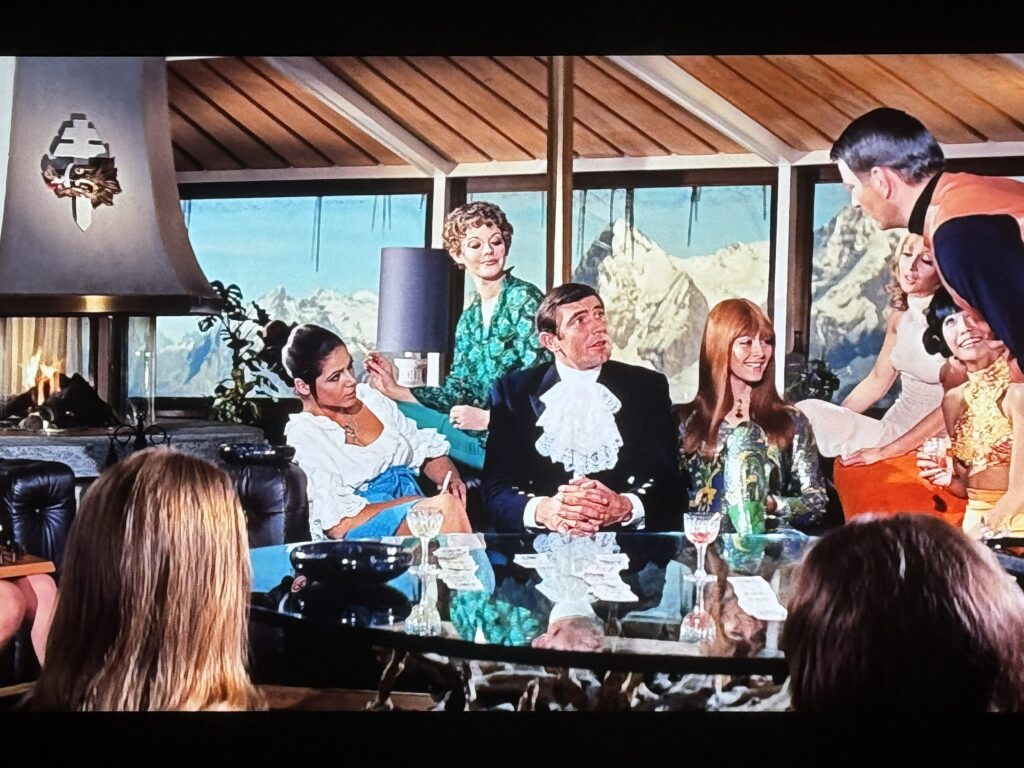
The film takes a bit to get going before we reach Piz Gloria and the Swiss countryside that makes up the most memorable setting of our film. Honorable mention to the casino scene in the first act, where we see Bond look over his hotel balcony at night, as the casino neon sign reflects below in the water. It’s a really cool shot, and evidence that like Skyfall this film takes great care with its cinematography.
When you think of Bond films set in the winter, or Bond on skis, this is the one that started it all. It very much pays homage to the recent 1968 winter olympics set just over the border in Grenoble, France, with our henchmen even wearing Olympic-themed jackets with what very much looks like the Grenoble Olympic Games logo/crest. We get some great ski chase scenes, ice racing, bobsleds and even curling making full use of this winter wonderland. What really elevates this setting to iconic status, is of course Piz Gloria (a real life famous restaurant atop Mount Schilthorn). Blofeld’s ice fortress, set atop the Swiss Alps in a no-fly zone, is not only formidable, but a mid-century architectural masterpiece in terms of interior design. The Alpine room, with its 360° rotating platform giving panoramic alpine views, is a standout in the series. It is even decorated for Christmas! It is the sort of exoticism of Bond settings that sets a certain very high bar. Everything about Piz Gloria, even the sound stage work, is a highlight of how good the production design is (courtesy Syd Cain). Die Another Day could really have taken notes from this one.
For its excellent and immersive use of on location settings in addition to iconic production design work, this portion of the category gets a 10/10. It does everything right.
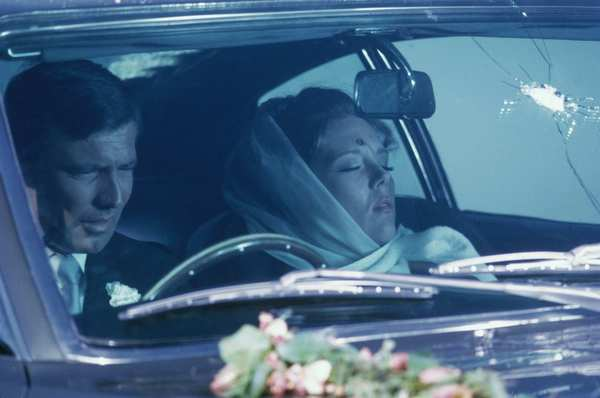
This story is quite interesting in that it is not a conventional Bond film, but rather a romance film first. The mission is very much a B plot, whereas Bond’s evolving romance with Tracy Di Vincenzo (Diana Rigg) is our A plot. Bond meets Tracy, who is presumably attempting her own life at a beach. Bond saves her, only to be pursued by her father’s goons (multiple times) as he continues to court the stunning but complicated young woman. Bond is taken to Tracy’s father Draco (an Italian construction magnate and mobster), who in turn owes Bond a favor, which Bond turns in for information on Blofeld. Learning that he is holed up in the Swiss alps under the guise of Comte Balthazar de Bleuchamp, Bond takes the identity of Sir Hilary Bray, a genealogist and herald from the College of Arms, pretending to certify “Bleuchamp’s” claim to be who he says he is descendent of. Having infiltrated the Piz Gloria, Bond’s cover is burned and he is turned over for capture after Blofeld of naturally tells him what he’s up to (which is hardly important in this film). Inevitably Bond fleas, and over several courses of lengthy action, Bond runs into Tracy, who hasn’t forgotten their summer romance. She asked her father to send her to find Bond in Switzerland. They get to continue their romance once she helps him escape, by car, on skis and even through avalanches— er almost. Tracy is captured, only for Bond and Draco to team up one last time. The mission is successful, Bond gets married to Tracy afterwards and oh, “we have all the time in the world,” annnnnd gunfire. Tracy is shot on their wedding day in Bond’s Aston, and our film comes to a very tragic end as Bond holds his newlywed in his arms in disbelief as our heart-wrenching string orchestra plays out our theme-song, We have all the time in the world. Or should I say, had.
It’s a terrifically effective emotional look at Bond who we come to learn has avoided getting too close to women because of his line of work (and this tragedy). That is the theme of this film, and it pulls it off perfectly.
There are however some pacing problems inherent with this unconventional approach to Bond story. It’s sort of the inverse of The Living Daylights, which drags in the second act. This film has a very slow set-up. However its payoff is terrific. I find it less problematic when a film is a slow burner, earning its build up. The emotional punch of Tracy’s death is well earned because this film really takes its time showing a complex, emotionally fragile woman falling for Bond, and Bond willing to be vulnerable in falling for her in return in spite of his reservations about his profession.
That said we cannot unpack this film without also talking about Lazenby’s rather wooden performance as Bond. He is without question the weakest Bond as an actor. This is especially clear in his delivery of quips that Connery would have crushed. This is why this film tended to get treated like the red-headed step child of the series for as long as it was.
I really enjoyed this film more than I thought I would. Tonally this film is definitely weird. The Blofeld storyline is bizarre, and hardly as interesting as some of his other schemes. He runs an allergy clinic where he has developed a virus capable of mass-infertility in mammals. He brainwashes a bunch of beautiful women to be the footsoldiers of this scheme, which he will use to blackmail the United Nations into giving him an undisclosed amount of money.
Bond as Sir Hilary also suffers under the performance limitations of Lazenby as Bond. Those scenes feel like filler.
However, every scene with Diana Rigg is a treat, and that’s why when she finally gets killed in the end, it packs a massive emotional punch.
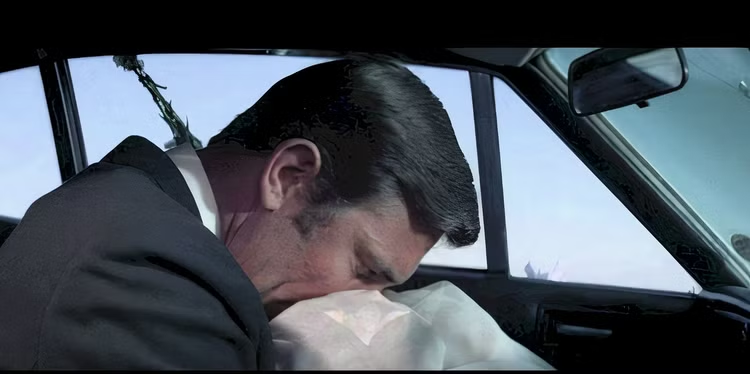
So while not your traditional Bond plot, it still delivers on its main goal: Bond in love first, mission second, to tell us a cautionary tale about being a spy in love. This part of our category gets a 6/10. Because it accomplishes its narrative goal in a convincing if not memorable way.
Overall between an iconic and memorable setting, and unique Bond story where the mission ins’t the main focus (without that being a detriment to my overall enjoyment) this category earns a solid 7/10.
Gadgets & Vehicles
Since this isn’t your typical Bond mission, and technically Bond is on two weeks leave (thanks Moneypenny), he doesn’t really have any gadgets. As with other films where Bond is on his own, he must instead rely upon his instincts and cleverness. This film does reasonably well with that (using pocket liners as mittens to scale a ski lift). So not exactly memorable for Bond gadgets because there really are none.
The vehicles offer two fine standouts, the ultra rare 1969 Aston Martin DBS, with its tragic ending (being the death location of Tracy Bond). Of course tracy’s rather iconic 1969 Mercury Cougar XR7 convertible.
While neither of these vehicles have memorable gadgets equipped to them, they are well utilized throughout the films run time, especially in the Alpine chase sequence and ice ring race.
Overall this is not your typical Bond film ripe with gadgets and vehicles fully stocked (I think you meant to say fully loaded). 2/10.
Action Sequences
The action sequences really vary here in terms of quality. The action directing was inconsistent. I didn’t care for the fight scenes, which felt like they suffered from jump cuts and a weird almost silverback era comic-book style of action to them. It felt like you were missing several frames of reference in between hits, which sort of took me out of the film. I don’t know whether or not this was stylistically intended.
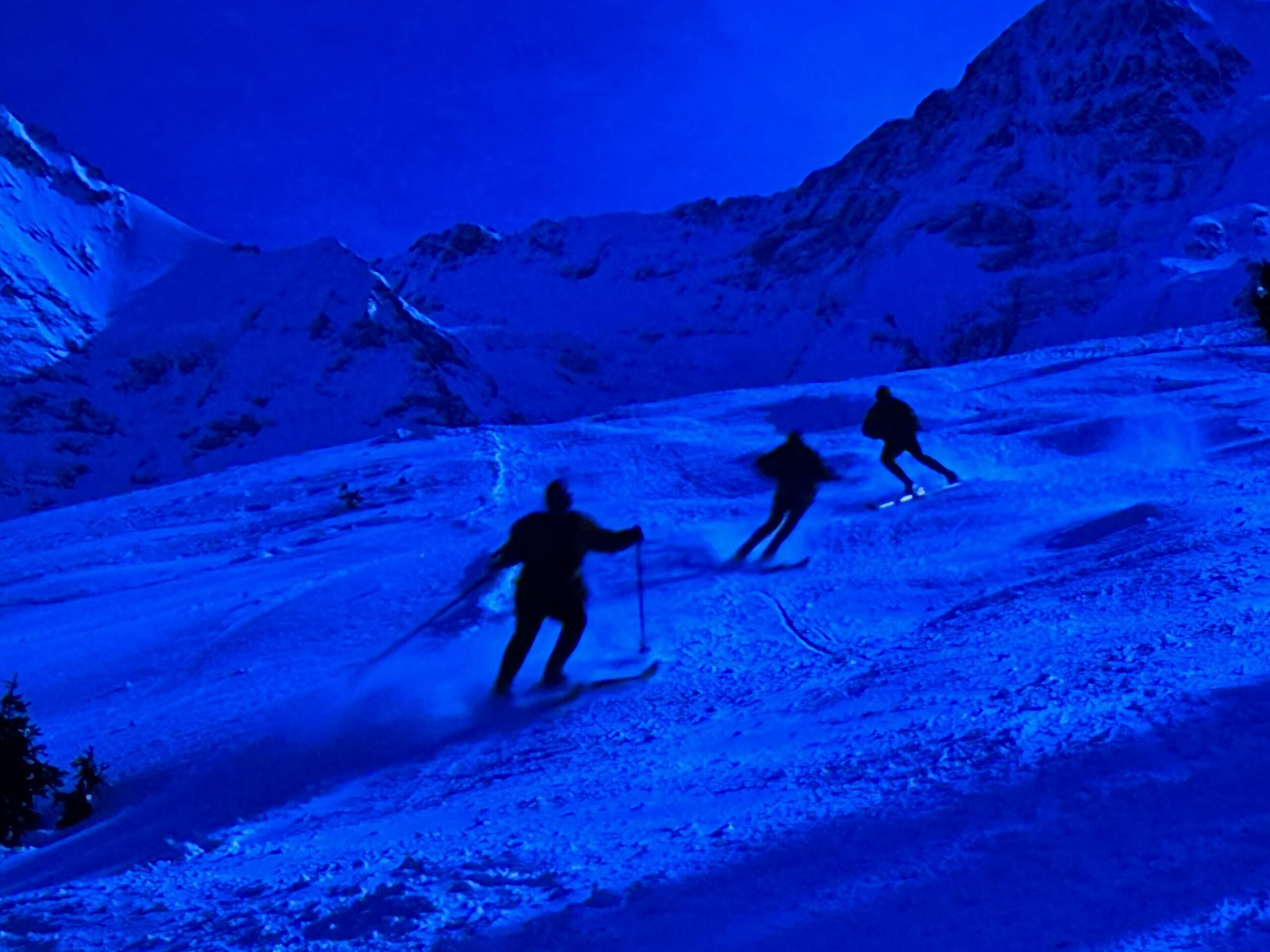
The first ski chase sequence at night is a rather dull affair. It feels dated, and there is not very good pace by way of editing and use of varied shots. It’s mostly flat, with long shots and little cuts in between the chased, and chasers.
However, after this scene I think the action sequence direction not only improves but it also ups its creativity, which is always something I look for in this film series. Standouts include the vehicle chase which culminates in an ice rally race, even if some of the close-ups feel like obvious miniature work (alas it’s 1969). I also think the skiing sequences are improved upon, leading to the avalanche scene, which unlike its counterpart in The World Is Not Enough really sells its peril and deadliness. The finale between Bond and Blofeld on the bobsled run is a great bit of action pacing/directing/editing done well. It’s also a super creative and memorable sequence of Bond using his environment to his advantage despite not having the upper hand.
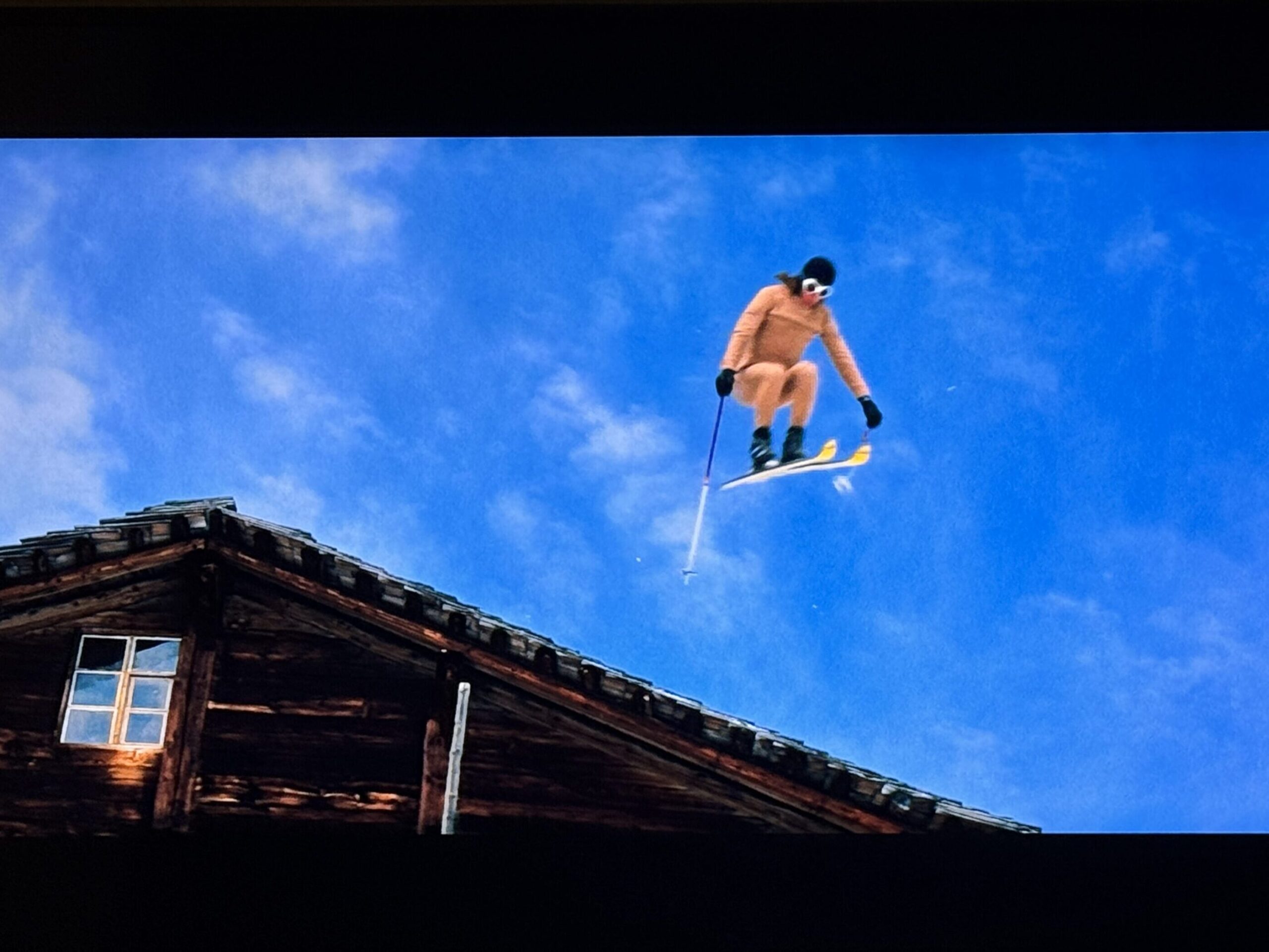
Overall this film is not well known for its action. We don’t get our first bit of action (outside a couple fights) until an hour and a half into the films rather long run time. However, once it starts it definitely delivers (unlike From Russia with Love). While inconsistent in their direction (owed to this being Hunt’s first film in the big chair), I enjoyed these action set pieces far more than that other slower Bond film of the era.
Overall, I’d say a good but not great 6/10.
Villains and Bond Girls

I don’t know why, but Telly Savalas never really makes me feel like I am watching Ernest Stavro Blofeld. I guess it’s hard to live up to the performance of Donald Pleasance (You Only Live Twice) but he felt more like the Count he was impersonating, than the main overarching villain of this era of the series. I understand why it had to be Blofled, because just having any other villain kill James Bond’s wife wouldn’t have the same emotional resonance. That said, since we never got a proper follow up to this film’s tragic ending (save Roger Moore’s visit to Tracy’s grave in For Your Eyes Only, twelve cold years later), did we really need to have Blofled do the deed? Did we need to set up this huge emotional storyline between Bond and Blofeld if it was something the series never intended to explore? For this reason the character of Blofeld feels poorly utilized and the actor is unconvincing in this role which also has a lame and rather weird Blofeld plot. 5/10
Blofeld’s henchwoman, Irma Bunt, is a derivative take on From Russia With Love’s Colonel Rosa Klebb (Klebb, very much inferred to have been a Lesbian, would have loved working with all those girls). This character is just a throwaway compared to the screen presence of Lotte Lenya. Unlike Blofeld who Bond technically gets revenge on many years later, we never get to take her out seeing as she was the one who pulled the trigger. 5/10
These villains both feel rather derivative and poorly utilized with a mediocre plot. 5/10 for this section.
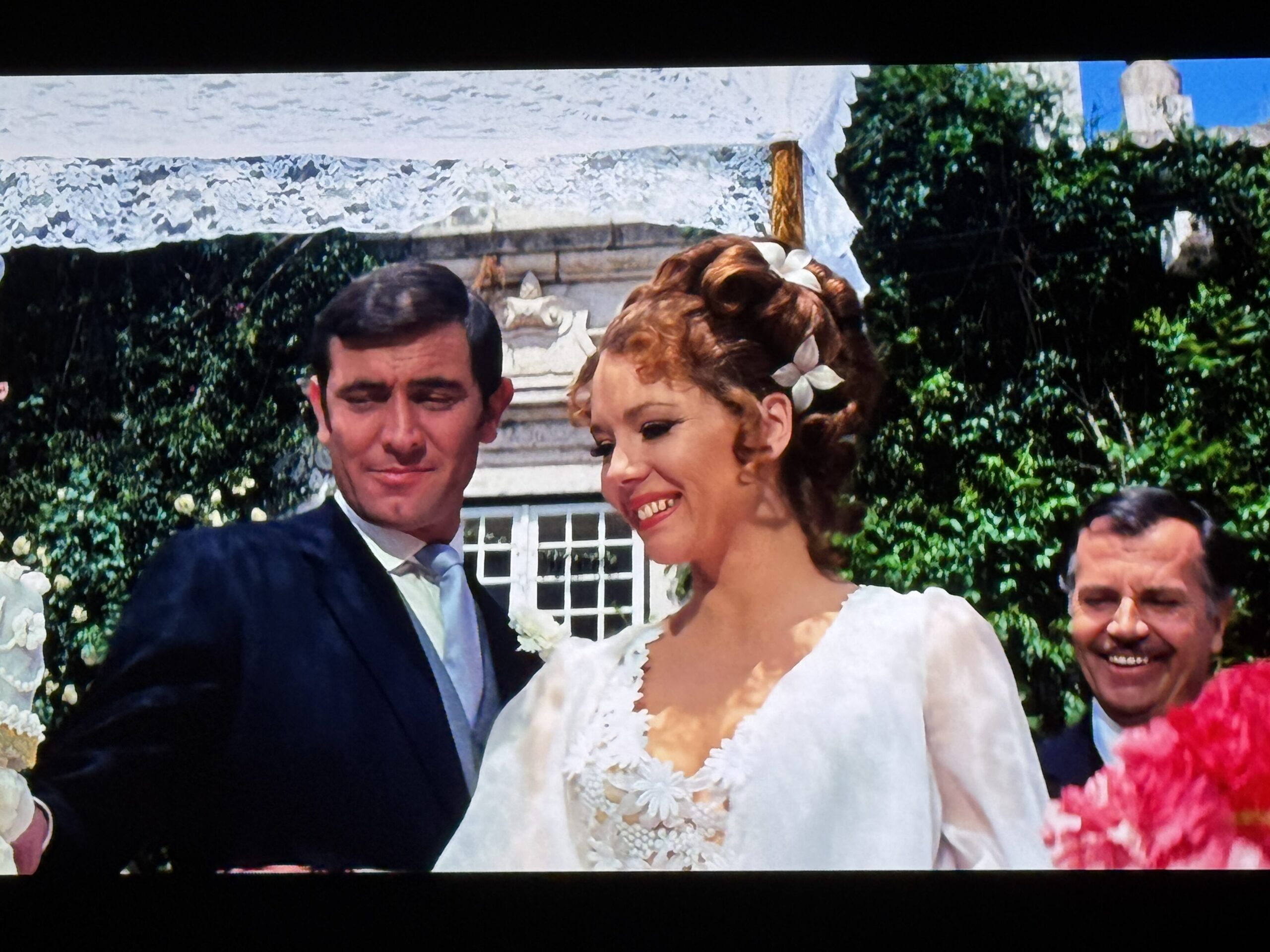
Now onto who is arguably my favorite Bond girl of all time, Diana Rigg as Tracy Di Vincenzo (aka Tracy Bond). This character is not my favorite simply because she marries Bond, but because she demonstrates emotional complexity often unseen in the series outside women who become villains (like Elektra King, who is heavily inspired by this character and movie). Tracy is seemingly difficult, and not in the way that films tend to trivialize it as “women being crazy.” She is extremely smart, confident and spontaneous while also being especially vulnerable to very deep thoughts and a certain free spirit. She is a sort of tragic figure, as if to suggest that in many ways, she would never work out as Bond’s wife. She is a Shakespearean tragedy figure, often mirroring the downfall and characterization of women throughout the works of Shakespeare himself. As both a literary device and well rounded character with incredible agency, she steals every scene she is in. She has magnificent screen presence. 10/10 she is the best, that’s why Bond married her.
Overall despite lackluster villains, we also got my favorite Bond girl of the whole series. So that rounds out this category to a 7/10.
Wildcard!
I’ve got two wildcards to speak of with this film.
Let’s talk about how well the theme’s love score haunted us throughout this tragedy. John Barry adapted his beautiful string orchestral arrangement from one of the two needle drops used in this film (We Have All The Time in the World performed by Louis Armstrong). I absolutely adore this instrumental score, and feel that it’s appropriately romantic if not also deeply emotive and tragic. A huge fan of the classics and opera, this string ensemble and refrain throughout the films more poignant and dramatic moments feels operatic. It brings tears to my eyes it is so beautiful. It is rare when music, let alone score music, has the power to evoke such reactions in viewers. I am listening to it right now, and thinking of missed romantic opportunities in my life, late into my thirties wondering whether we really do have all the time in the world. This song made me feel lovesick for the one(s) I couldn’t have and keenly aware of the concept of time gone by. This instrumental song is perfection for the powerful dichotomy of sorrow but also the deep love it invokes. 10/10 song.
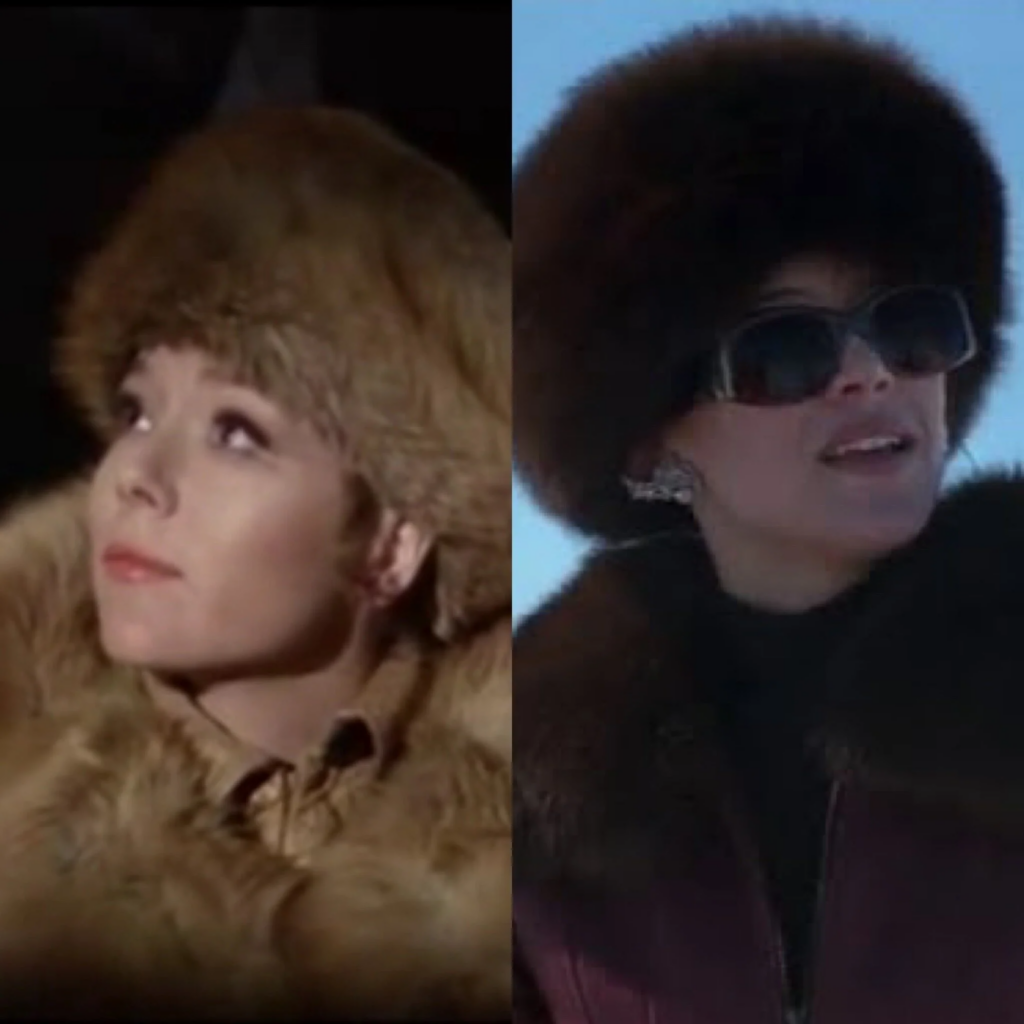
The other wildcard in this film is its impact on the series overall. Bond having married, losing his wife and forever being damaged over his loss, is canon. It is one of the few things which has remained canon for close to sixty years. Even the best Craig film explores its own version of OHMSS with Bond/Vesper in Casino Royale. Nowhere is its presence felt more than in one of my other favorite’s The World is not Enough. There is not a doubt in my mind now having watched both recently that Elektra was meant to be based on Tracy, eliciting what could have been were she not a villain. She is an emotionally complex woman, whose vulnerability is an attraction to Bond, who I argue does fall for her. She is costumed in the same skiing outfit as Tracy during the cold reception scene. At the end of the cold reception scene, Bond protects his female companion from an avalanche. They enjoy a bit of time at the casino together, where one side loses, and quickly follows Bond to bed. The title itself takes root in the Bond family motto, “the world is not enough,” first presented in OHMSS when Bond learns about his under cover world. When Elektra taunts Bond, telling him, “I could have given you the world,” Bond replies, “the world is not enough,” to which Elektra retorts, “foolish sentiment,” — Bond: “family motto.” It’s a very memorable exchange and one meant to cement the filmmakers intentions behind its influences. Yes, Bond loved Elektra. This film, for all the panning it got in 1969, has had an indelible impact on the series, including on some of my all time favorites. 10/10 for its impact.
For these two perfect wild cards, it earns a perfect 10/10.
Conclusion.
You don’t have to like this film, but you do have to respect it and its impact on the series overall. I was fully prepared to pan this film one hour into it. However, it absolutely earns its payoff. While it may not be a traditional Bond film, light on a lot of the stuff audiences including myself really love, it is so convincing in its Bond/Tracy plot that I don’t mind that. I am totally invested in this epic romance, and its impact on our beloved character and series. That’s why I really appreciate this film in spite of it being so different. I really hope others give this one another chance and go into it understanding that while it is different, it is also still great. So for its enduring impact on the series, along with my personal enjoyment of it, it earns a very solid 7.5/10 overall.
Discover more from MK Leibman Writer
Subscribe to get the latest posts sent to your email.